


Rory Waterman
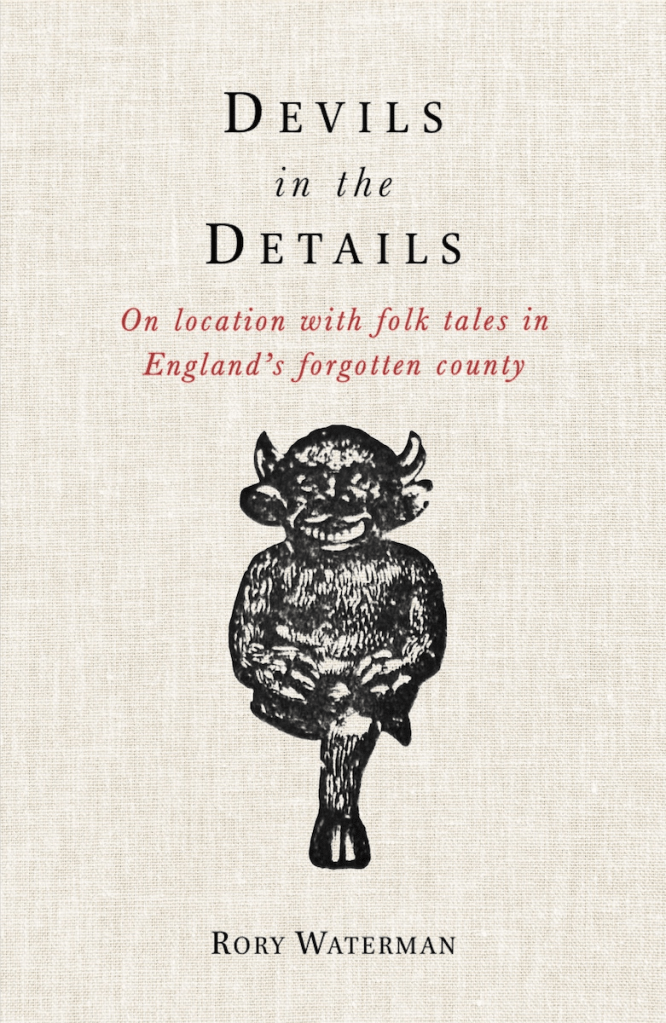
I’m not a ‘guest writer’, I’ll confess: I was the project lead on the Lincolnshire Folk Tales Project during its funded period, and now keep the website going on my own. But please excuse the indulgence. My new book, Devils in the Details: On Location with Folk Tales in England’s Forgotten County, is published today. It explores folk tales, where they came from, and the places, events and people associated with them in my home county of Lincolnshire, and can be ordered here, or here, or even, if you must, here. Some of the pictures in the book are from archives, but most are photographs of objects or places. I thought I’d now post a few that didn’t make the cut, but which I like a lot. I could’ve posted a great many more, but I’ve restricted myself to seven, on the grounds that I’d like you to want to read this.
Crowland
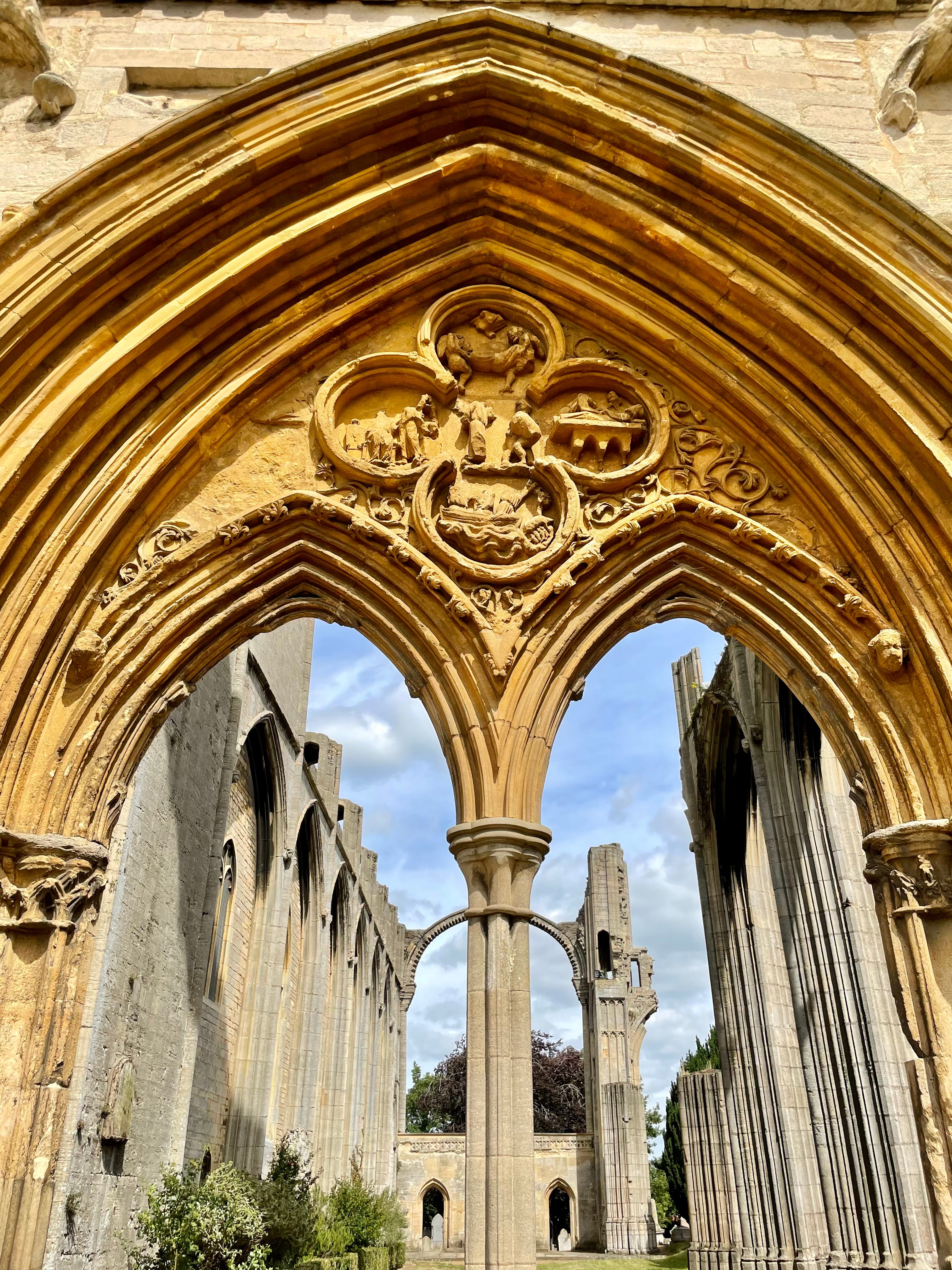
The above picture looks through the west door and down the nave of Crowland Abbey, in the very south of the county, a few miles from Peterborough. The quatrefoil depicts scenes from the life of St Guthlac. The town’s parish church, which is as beautiful as you’d expect, occupies the aisle to the left; the bulk of the building is this ruin. You can find a little more information about the folklore associated with the site on our folk tale map, here and here.
I took this picture in the summer of 2022, and didn’t begin writing the book for another 18 months. Initially, I’d intended to have a big section on Crowland at the end of the chapter called ‘The Valley of God’, but then decided to avoid including too much about religious miracles. I do think miracles constitute folk tales, at least if they’ve come free of those religious moorings to some extent and entered secular tradition too in some other form. But I have vague future plans for work on that sort of thing. I make an exception with Bardney and Bardney Abbey, for reasons you’ll understand if you read the book.
Alkborough
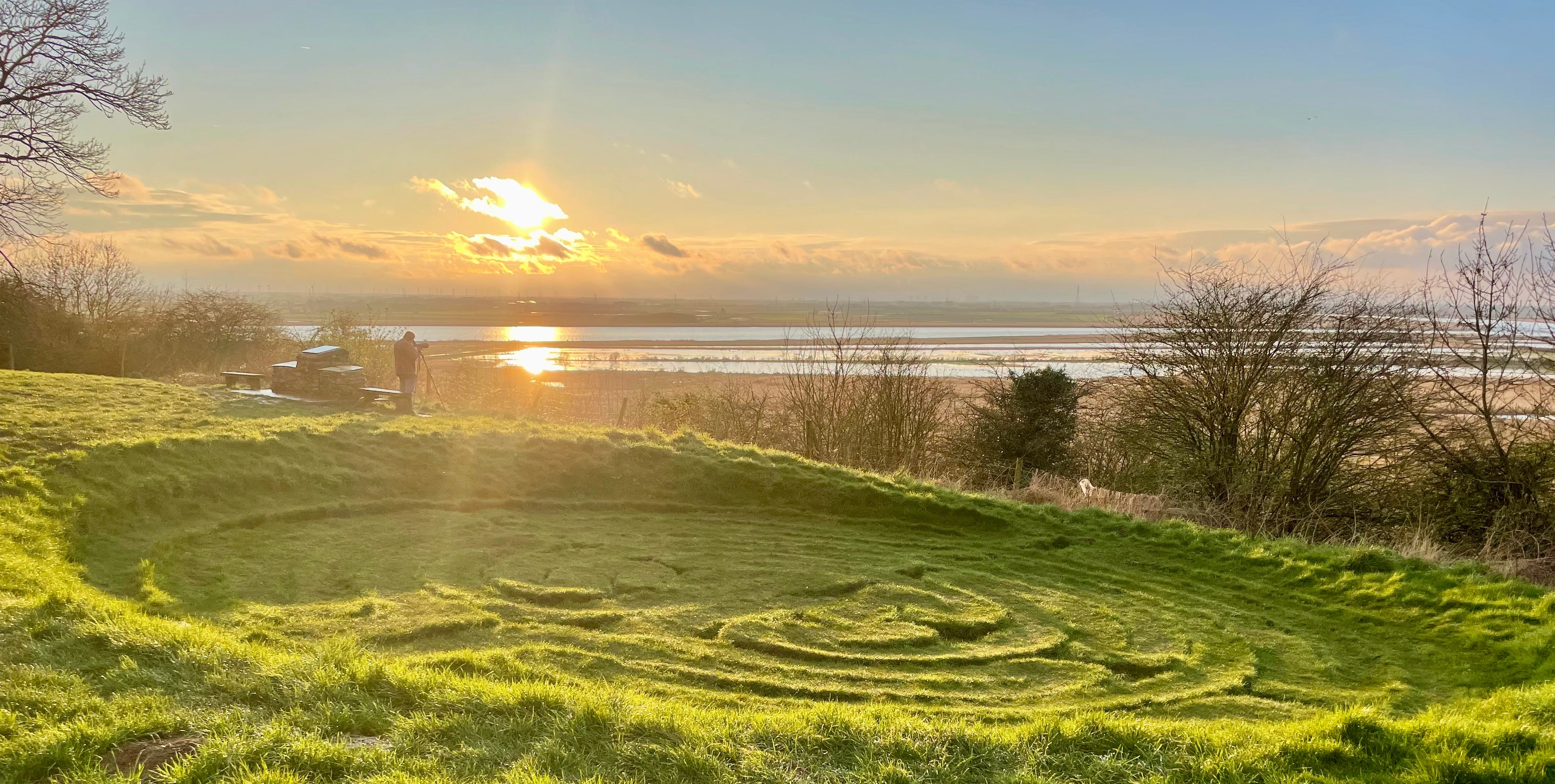
And now to the north-western extremity of the county. This is Julian’s Bower, the only surviving turf maze (in fact a labyrinth: you can’t get lost) in Lincolnshire, and the only remaining turf maze in England still known by that name, which was once common. From it, you can see two counties and three big rivers: the Ouse and Trent enter the Humber, carving through the meeting points of Yorkshire and Lincolnshire. The photo isn’t great, but I’d intended to go back with a better camera and try again.
Why didn’t I? Well, I assumed folk tales of some kind must still exist around here, or must have been recorded in books and/or archives, but could find nothing of note, despite extensive searching and chatting.
Skegness
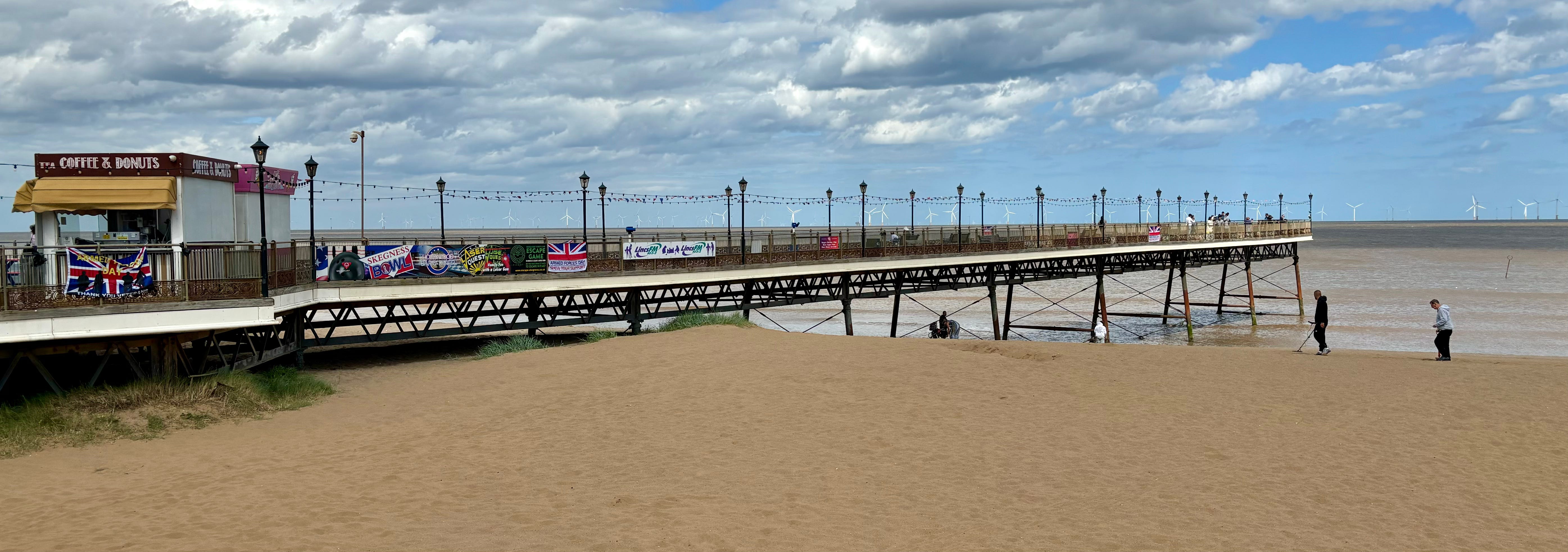
There is a chapter in the book on Skegness (and the smaller inland town of Burgh le Marsh), which discusses various local legends (and true stories), and Tennyson’s trips to what would become Skeggy, but mainly focuses on the story of an exciseman being murdered and his body being hidden in a bricked-up alcove at the Vine Hotel. You’ll have to read the chapter to find out what I think of all that, and why, but suffice it to say that the history that gave rise to the story is fascinating, and not widely known.
The chapter begins with a description of the prom and pier, and includes mention of two men swooshing metal detectors across the dry sand. I think this photo sums up some things about the town, for better and for worse.
Saxilby
In 1805, Tom Otter (or Thomas Temporel) pulled out a hedge-stake on a lane near Saxilby, which is now named after him, and smashed his heavily-pregnant second (and concurrent) wife to death with it. He was subsequently hanged and his body was displayed in a gibbet close to the scene of the crime. Tall tales soon arose, and some of the least unbelievable of those stories are repeated as fact even now; various authors have discounted the taller stories, but taken their source, at least, at face value. This tells us something. I talk about that in my book.
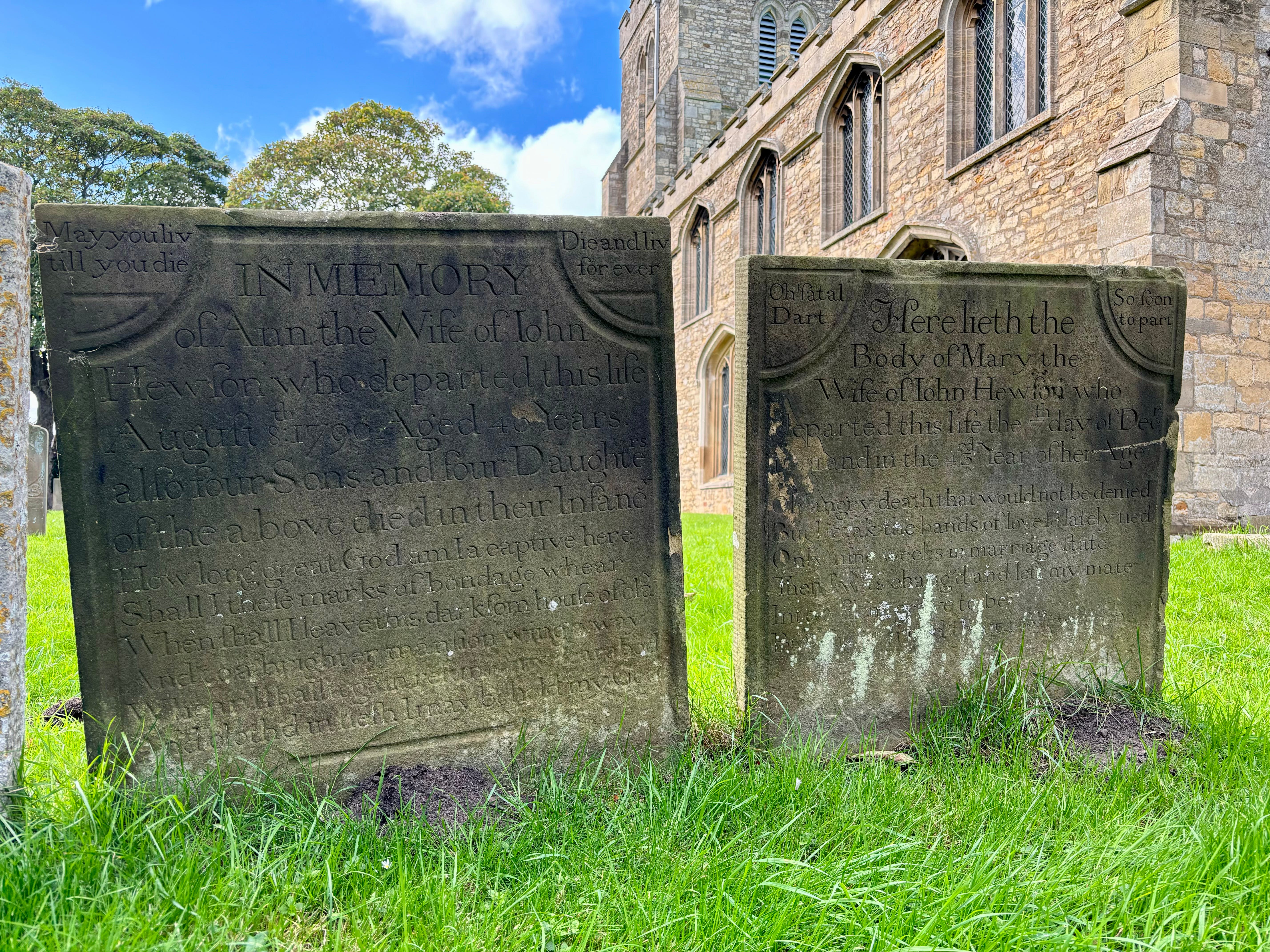
Tom Otter’s name, and the gibbet, are remembered in the names of several places (the aforementioned road, a bridge, a wood, a farm, some cottages, etc) and ‘his’ story is retold over and over, but his victim, Mary Kirkham, has essentially been forgotten. It was ever thus. A memorial would be nice, wouldn’t it? In one chapter, I go in search of Mary’s final resting place in Saxilby. These gravestones in Saxilby churchyard are mentioned in the book, but I didn’t include a photograph of them, because they weren’t why I was there.
Redbourne
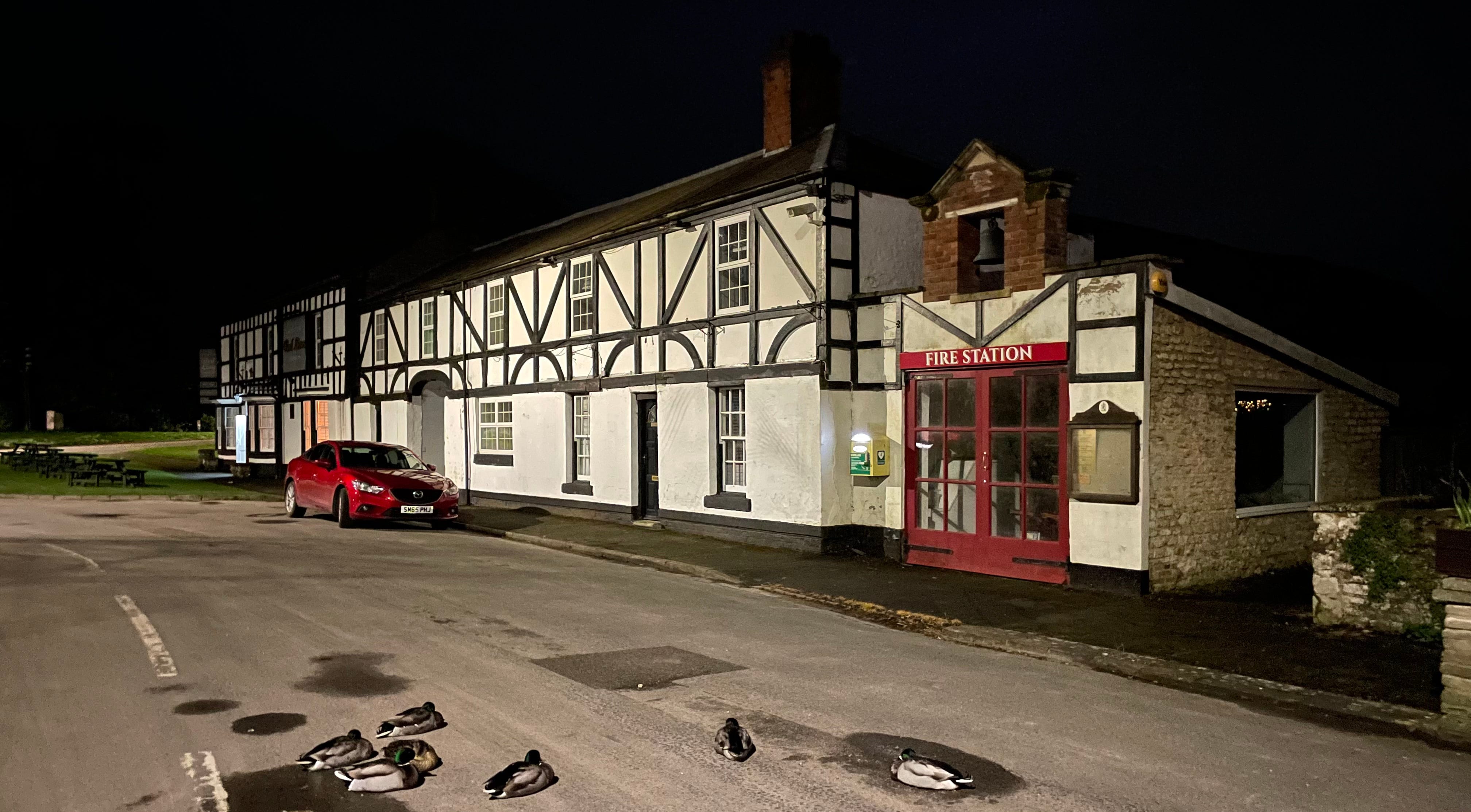
This is the Red Lion, Redbourne’s very fine old pub. The village pond is just out of shot to the right. Ducks are stupid.
Marie Clothilde Balfour – budding novelist, doctor’s wife, and cousin of Robert Louis Stevenson – lived in the village for two years in the 1880s, and collected folk tales from local people. Ten of them were published in three instalments of the journal Folklore in 1891. She implies that several of her tellers were drinking copious amounts of gin and in some cases openly eating opium, which might be reflected in some of the stories I discuss in the book.
Redbourne is a very beautiful village, but no photograph of it made the cut for the book: my chapters on the tales collected by Balfour, which include ‘Tiddy Mun’, ‘The Dead Moon’ and ‘Yallery Brown’ (you can read my own version of that in this), mainly focus on the village’s environs and on interpretations and retellings of the stories.
Nocton
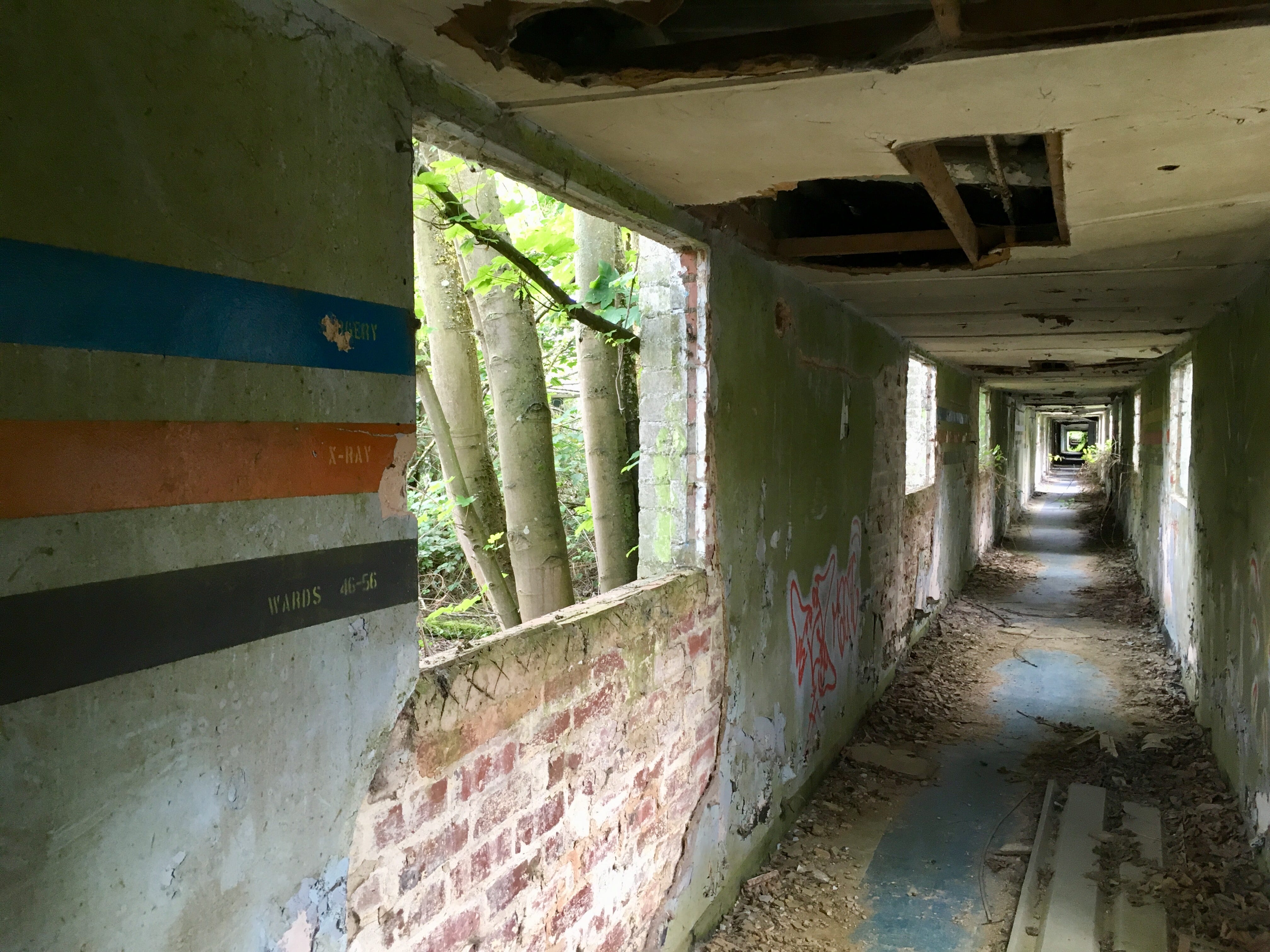
I include mention of this place in the book: ‘A full-scale hospital, RAF Nocton Hall, later developed in the Hall’s grounds, and closed when I was a child, so as teens we used to go there at night sometimes to scare ourselves among discarded operating tables and beds, ignoring the GUARD DOGS ON PATROL signs, which we knew were bollocks. It still rots away, our of sight behind a million unwieldy bushes, like a single-storey Chernobyl.’ There are lots of legends associated with Nocton village and its environs, and it is where I lived between the ages or two and fifteen, so it seemed like the right place to end the book.
This photo was taken in 2019, when I visited with my friend and colleague Andrew Taylor. A quarter of a century after my teenage years, it had become a far less interesting place, with almost all of the abandoned equipment, fixtures and fittings gone, and half of the ceilings on the floor.
And finally…
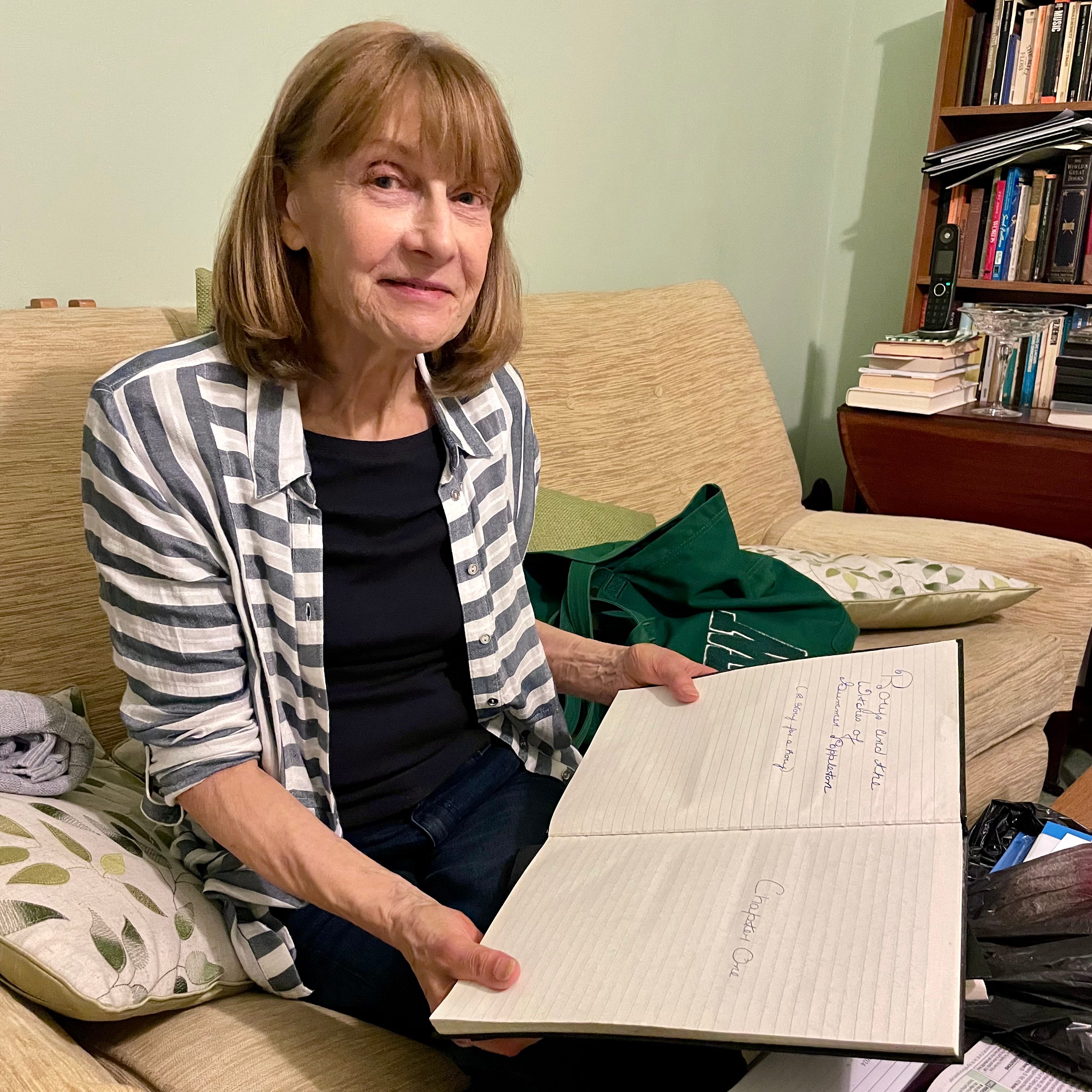
My mum with a story she wrote in the 1980s, which lends its name to the last chapter in the book, and perhaps inspired the whole adventure.
Buy Devils in the Details from Five Leaves or from Waterstones or from Amazon, or from wherever you get your books.
Read excerpts from chapter 4, chapter 6, chapter 10, chapter 13.



Leave a comment