


by Alister Walker King
Introduction
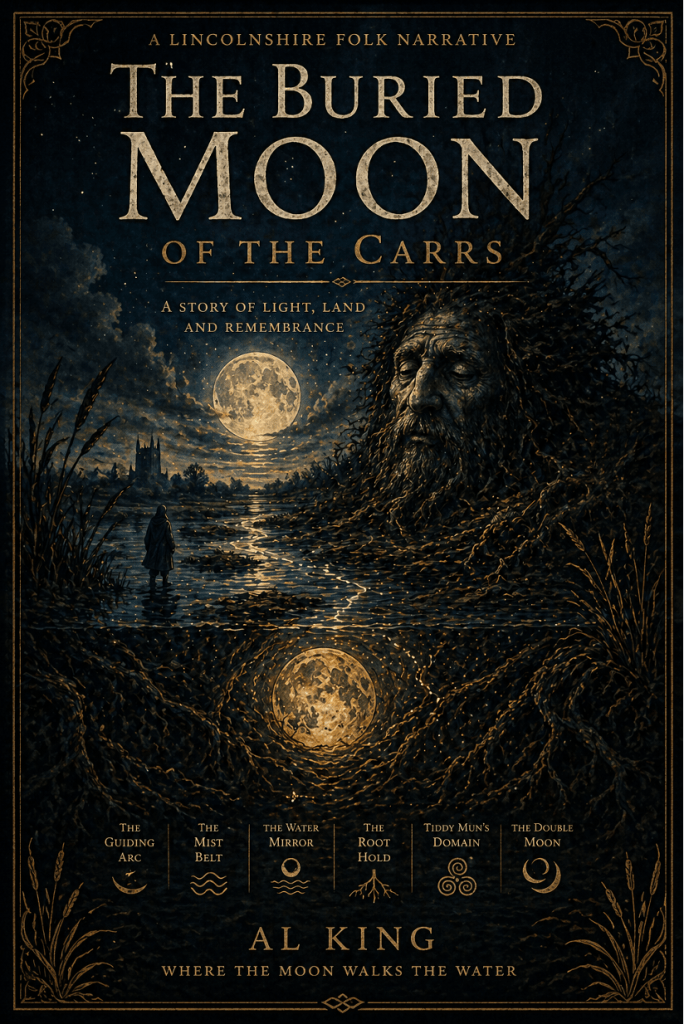
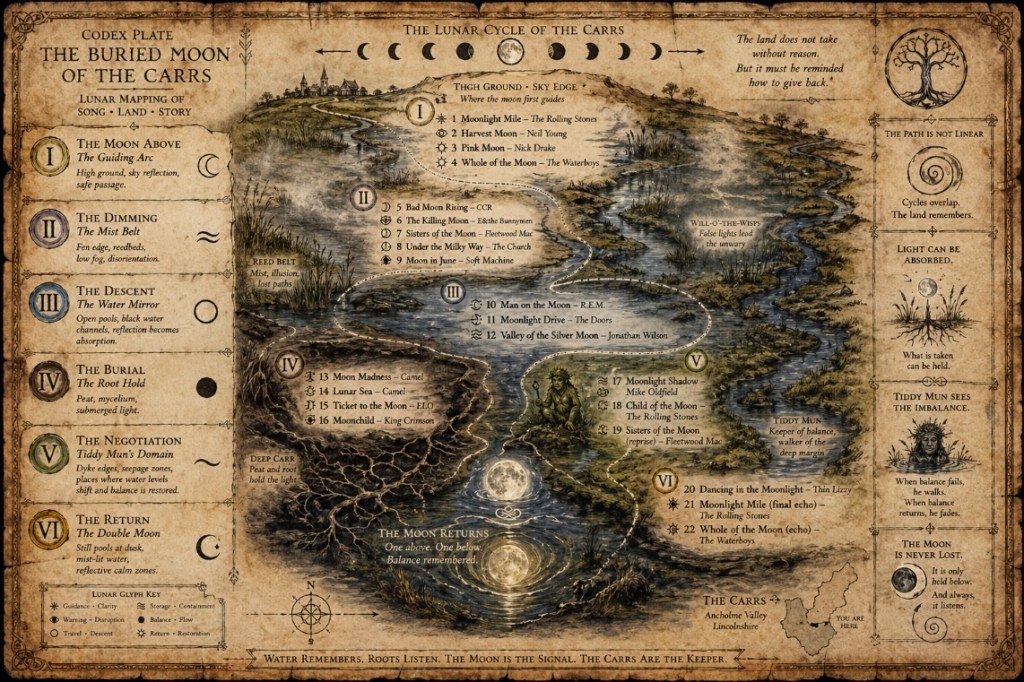
This piece reimagines the traditional Lincolnshire tale ‘The Buried Moon’, relocating it firmly within the Carrs and wetland landscapes of the Ancholme Valley. Rather than retelling the story as a fixed folklore fragment, it approaches it as a living myth—one shaped by the land itself, where water, mist, and peat hold memory as much as history. Familiar figures such as Tiddy Mun appear not simply as characters, but as keepers of balance within this environment. Woven through the narrative are references to moon-themed songs, used as subtle markers of place, phase, and atmosphere, linking contemporary culture with older storytelling traditions.
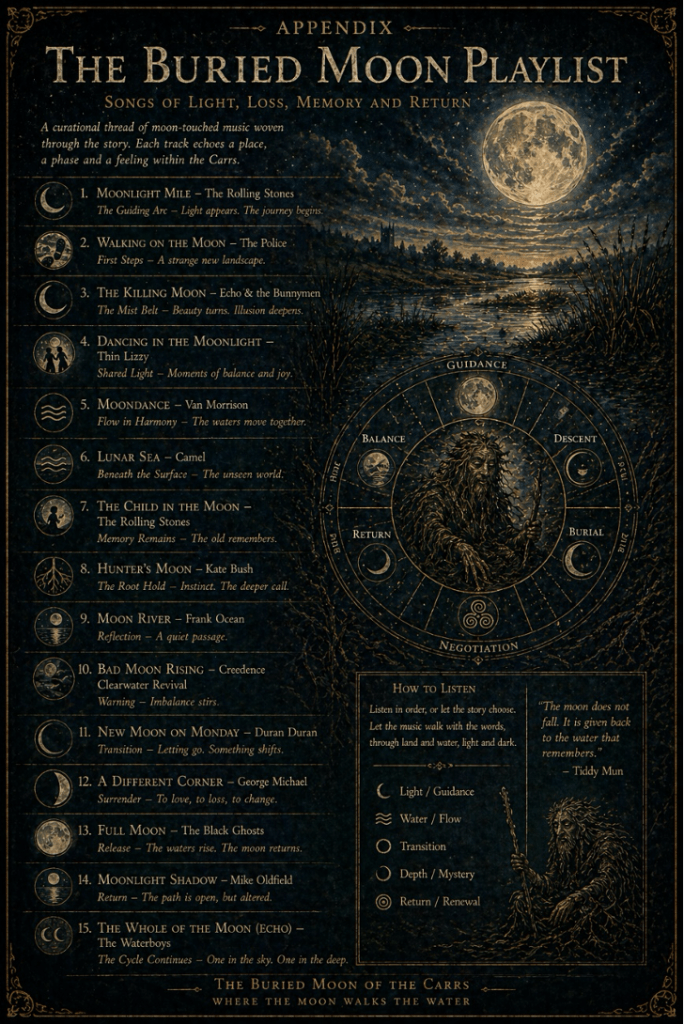
The following playlist accompanies The Buried Moon of the Carrs as a parallel thread of atmosphere and meaning. Each track—drawn from moon, moonlight, and lunar imagery—has been woven into the narrative itself, not as reference but as resonance: markers of place, phase, and feeling within the landscape. Songs such as Moonlight Mile, The Killing Moon, and Lunar Sea echo the journey of the Moon through sky, mist, water, and root, tracing the same arc as the story—from guidance, through loss and burial, to balance and return. Read alongside the text, the playlist forms a kind of modern folk layer—where music becomes memory, and sound carries the same quiet signals as the land.
Alister Walker King, May 2026
A Witham Chronicle Fragment (Lunar Edition)
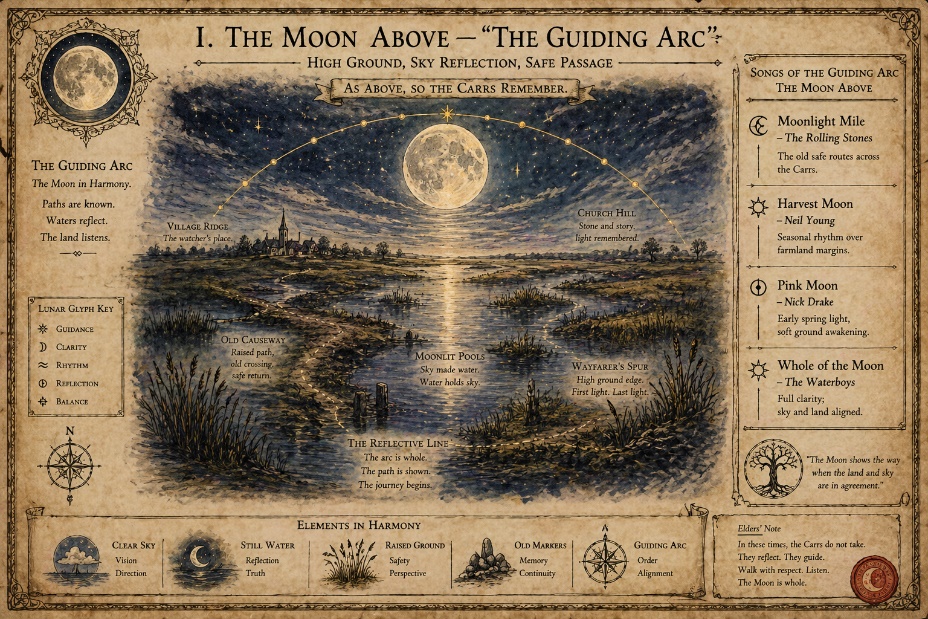
There was a time, before the drains were cut and the rivers taught to run in lines, when the Carrs lay wide beneath the sky.
On clear nights, the elders would say you could walk for miles by the moonlight mile, never losing your way, for the land and the sky were in agreement then. Water held the light gently, and the reeds whispered it onward.
In those days, it was always a kind of harvest moon that watched over the lowlands—full, steady, patient. A light that belonged not just to the sky, but to the turning of seasons and the remembering of paths.
Some called it the pink moon, in the soft months when the ground first stirred. Others watched it warily, for they knew that not all light came kindly. There were nights when a bad moon rising seemed to pull at the waters, when the Carrs shifted in ways that felt… deliberate.
And yet, there was wonder too.
Children would speak of a moonchild who walked the reed paths, a pale figure who knew every crossing and never sank. Whether dream or truth, no one could say.
The Dimming
It began as a thinning.
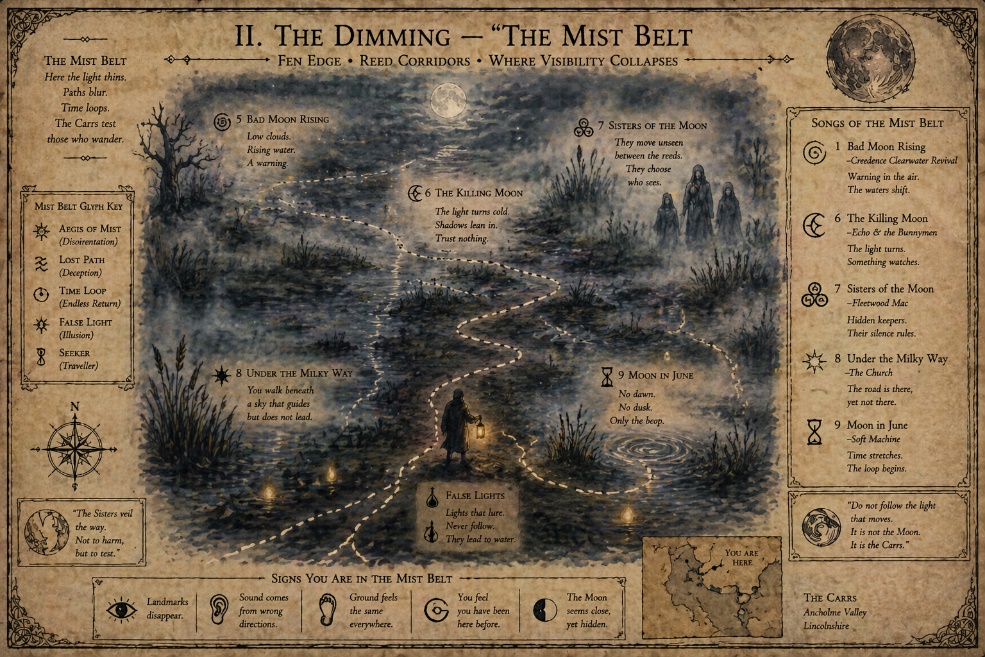
Not darkness—never that, not at first—but a weakening of the bond. The light still came, but it no longer held.
A hunter returning late spoke of a sky that felt wrong, as if the moon itself had turned away—a killing moon, he called it.
The women of the village, who knew the rhythms better than any, spoke in quieter tones. They said the sisters of the moon—those unseen keepers of tide and time—were no longer in harmony.
And when the young men laughed it off, and wandered further into the mist, they came back changed. They spoke of walking under the milky way, yet feeling as though the ground beneath them no longer answered.
One night, in the long stretch of early summer, when the days barely released their hold, a shepherd lost his way entirely. He swore later he had been caught in a kind of loop—a drifting, endless wandering, as though time itself had slackened.
He called it a moon in June, but not with fondness.
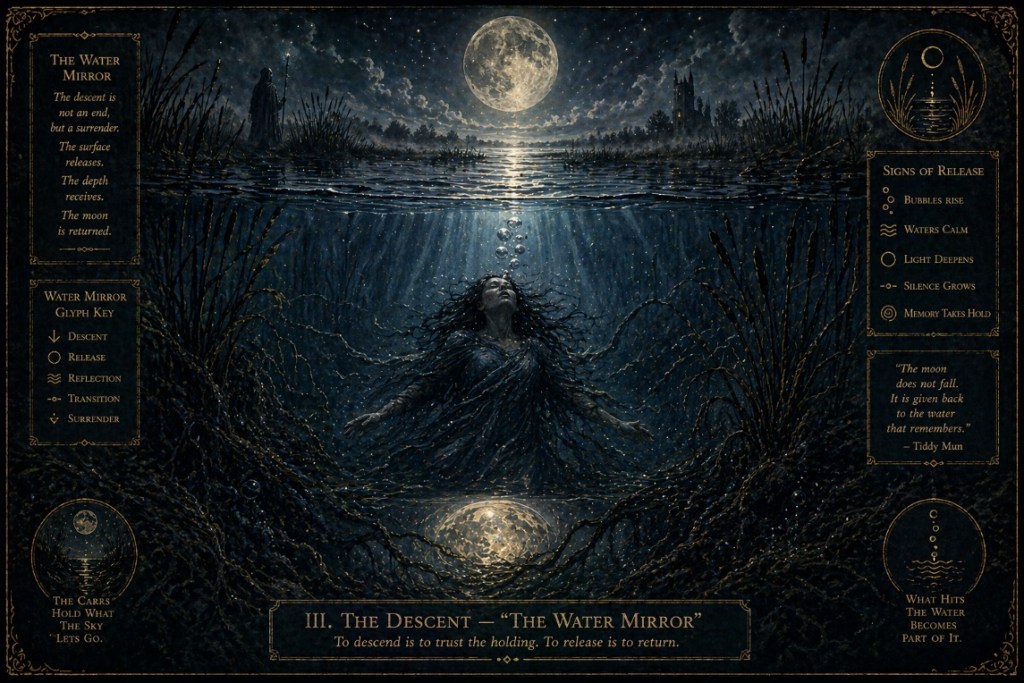
The Descent
The Moon saw this.
Not as men see—but as something that feels the pull of imbalance across great distances.
And so, she came closer.
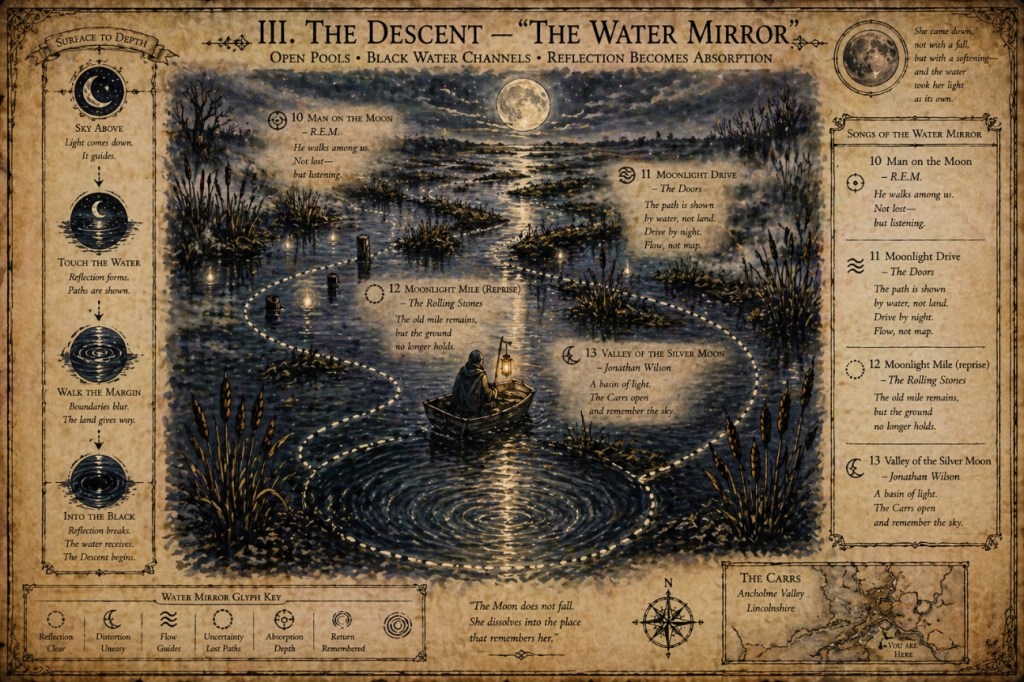
Those who dared to enter the Carrs at night began to speak of walking as though man on the moon himself had come down—yet not clumsy, not lost, but knowing. A presence that walked the water’s edge, whose light did not fall from above but moved alongside you.
At times, it felt almost like a moonlight drive, a gentle guiding force that drew you along the safest path, curving with the land’s hidden contours.
But the deeper she came, the stranger it became.
For the Carrs began to answer.
THE BURIAL — “THE ROOT HOLD”
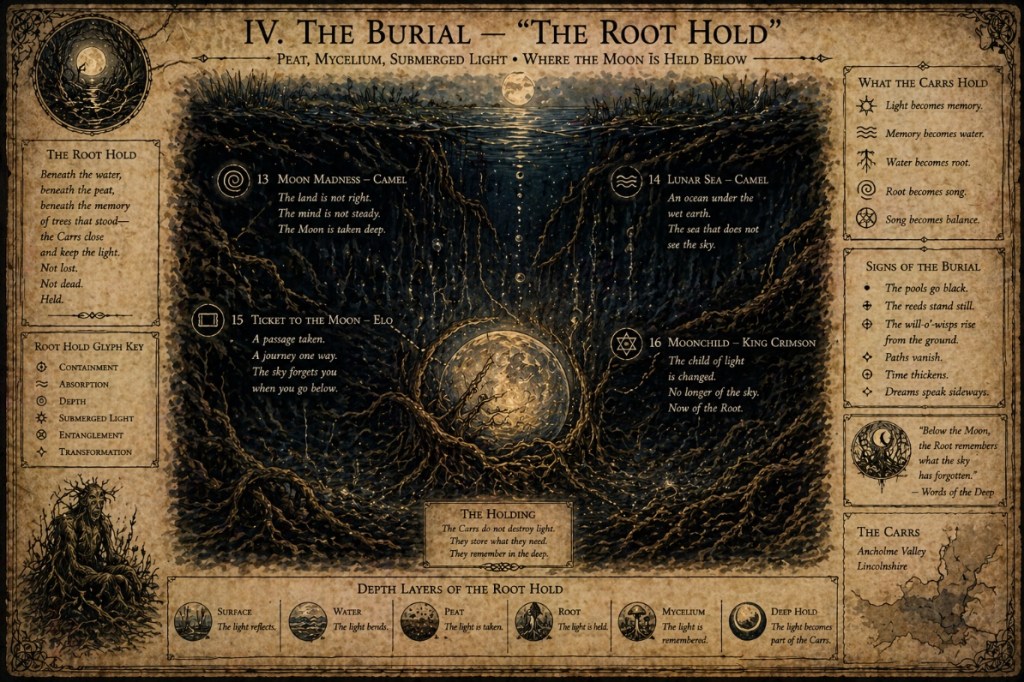
The Taking
The water darkened. The reeds leaned inward. The ground, soft already, grew uncertain beneath even the lightest step.
The elders whispered of a spreading unease—of a moon madness that was not in the sky, but in the land itself. And then, one night, she did not rise.
The Silence
Without her, the Carrs were not merely dark. They were unbound.
Men lost themselves not just in distance, but in thought. Paths shifted. Voices echoed from places where no one stood. Some spoke of hearing distant songs—fragments of old melodies—like a moonlight shadow passing through memory.
Children cried in their sleep, speaking of a figure just beyond sight—a child of the moon calling from somewhere beneath the ground.
And the oldest among them, who remembered things others had forgotten, would say only this:
“The whole of the moon is no longer above us.”
TIDDY MUN
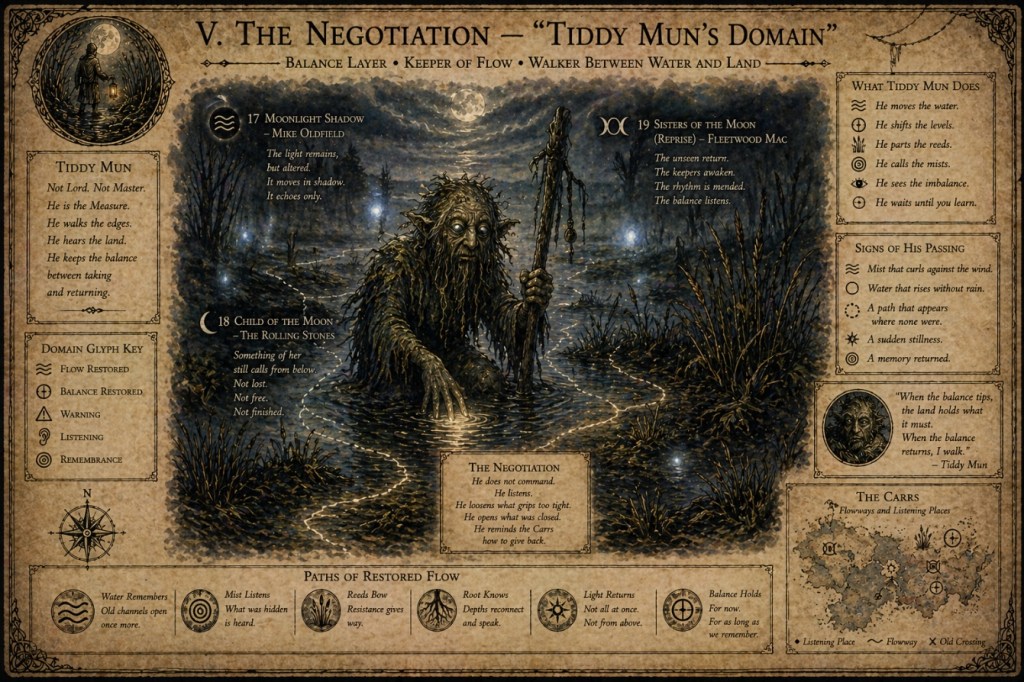
They began to leave offerings again.
Not out of tradition—but necessity.
Milk. Bread. Silence.
For there was one who might hear.
Tiddy Mun
He did not come from the sky, but from the water.
From the low places where the light had gathered—and been held.
Some saw him only as a ripple. Others as a shape no higher than a reed, moving where the ground and water argued.
He walked not in haste, but with purpose.
Through what some later called the Valley of the Silver Moon, where the land still held a faint glow beneath its surface, he moved, listening.
The Descent Below
He did not seek to command the Carrs. He listened to them. And what he heard was not malice—but imbalance. The land had taken what it needed The Moon had come too close.
And now she was held—not destroyed, but folded into the deep.
Tiddy Mun went down. Beneath the black water. Beneath the peat. Into the place where root and memory intertwine. There, the light still moved. Not freely—but it was not lost.
The Release
What followed was not a battle but a negotiation.
A slow, careful undoing. He loosened the hold of the Carrs, just enough.
Reopened what had closed. Reminded the land of its own limits.
And gradually—almost imperceptibly—the light began to rise again.
Not all at once. But in fragments. In glimmers.
In places where, if you stood still enough, it felt as though the earth itself was dancing in the moonlight.
The Return
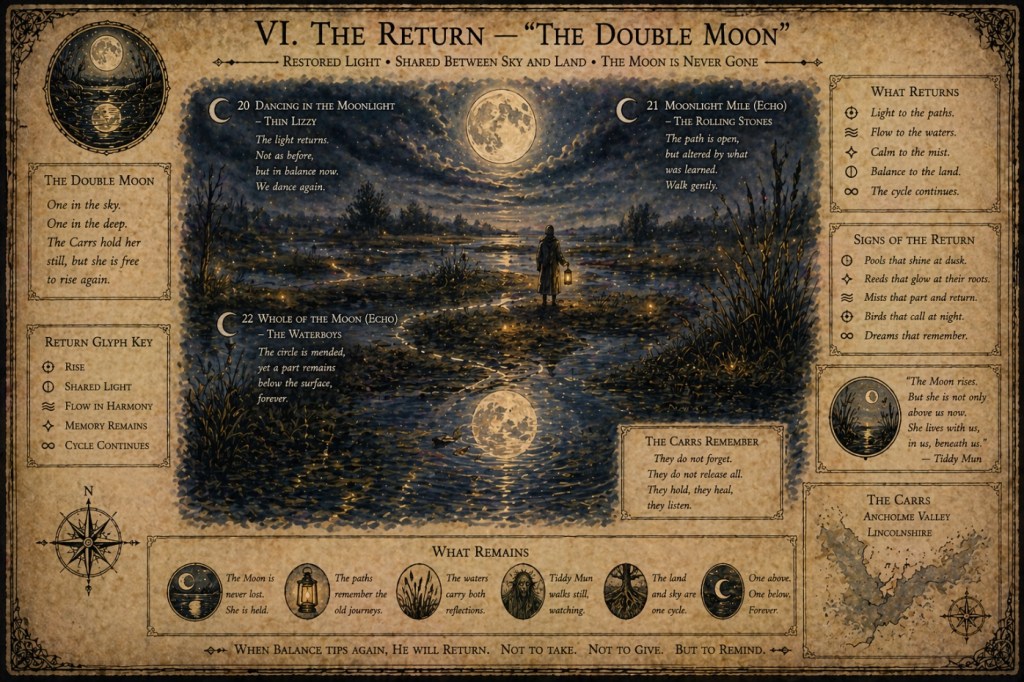
On a night thick with mist, when no one dared walk far, the waters began to glow.
Not from above. From below.
Pools shimmered. Reeds shone at their base. The Carrs breathed.
And then, the Moon rose. Whole—but changed.
For some part of her remained always in the land.
What Remains
Even now, they say there are nights when you can walk the old paths again, as if retracing that ancient moonlight mile. Places where the ground holds a faint glow, like a memory of the lunar sea beneath your feet.
And moments—rare, quiet—when the sky and the land align once more, and the light feels… shared.
And when the balance tips, as it always does in time, Tiddy Mun returns. Not to take, not to give, but to remind.
That the sky is not separate from the earth. That what rises may also be held.
And that somewhere, beneath the Carrs, the Moon still listens.



Leave a Reply