


In 2006, Lincolnshire-born experimental theatre director Mike Pearson published In Comes I, aiming to make sense of our sense of place. He describes his work:
In Comes I proposes an original approach to the study of performance. Drawing from archaeology, geomorphology, folklore, local and family history, it challenges disciplinary boundaries and scholarly conventions. The book takes ‘region’ as its optic, acknowledging the affective ties between people and place.
The author returns to the landscape of his childhood and uses it as a mnemonic to reflect widely on performance theory and practice. In the form of a series of excursions in a defined geographical area – off the beaten track in eastern England – the book weaves together performance and land, biography and locality, memory and place.
Evoking moments form different periods over the last 200 years, forming them into asynchronous juxtaposition, attempting to create a deep map.
… the book might serve as a guidebook for a journey through a landscape imagined, the texts stimulating and catalysing memories and reminisces of similar times, similar places, similar experiences – and other times, other places, other experiences – in acts of biographical wandering.
At the start of May, a friend and I endeavoured to retrace some of Pearson’s journey, through Hibaldstow, the site of his autobiographical performance Bubbling Tom (2000), creating a deep map of our own.
Monday 5th May, 2025
09:47 am
We arrive on the road from Scawby way, past The Wheatsheaf pub, which is where we will end up for lunch.
I say we…I had always imagined making this small pilgrimage alone but I am glad for my travelling companion who will provide me with an audience of one. There is a magic in the reading aloud of the words, especially to someone who had never met Mike, on this storytelling journey that retraces the landscape of his childhood.
I get excited as we approach the familiar frontage of the Fish and Chip shop, though I have never before set foot in Hibaldstow, a village in North Lincolnshire.
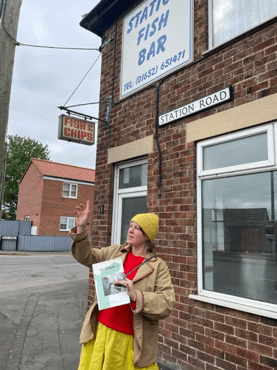
We start in the wrong place with me reading the right words. I thought I knew the correct lamp post, but I needed to take the map more literally. Perhaps it was the frisson of finally being in this place that I had heard and read about so often while forming my own ideas around storytelling and performance.
Nevertheless, a tractor rumbles down the street at exactly the right moment to compliment something laid down in the text. And it is the text that tells us I have begun slightly off site…We adjust our position and I carry on reading aloud.
Unexpectedly, there are some words in this first passage that I find difficult to speak. I have read the whole book more than I could care to admit but have never spoken it out loud, in public.
We break the narrative to discuss how to negotiate this hiccup. I think it is important that they have been left in, that the text retains its veracity… but times have moved on since 2006…and while it offers the important opportunity to have a conversation surrounding some of the terminology, I find I cannot speak those snippets myself without qualifying my own distance from them. And that is a clever device indeed. An early reminder before we get too lost and tangled up together.
They are not my memories, not the words I would have chosen, but they stir my own memory as well as that of my witness. They raise questions and recollections for us both.
People here still remember Mike. They recognise his name and his image on the front of the book I am holding, and we are largely left to our own devices… Except when locals want to intervene, correct, reminisce. It feels pleasing to know that the event, and its author are remembered fondly still.
Outside the village store (where we will later buy plum cake and sandwiches for the onward journey) we hear an otherworldly sound… and quickly realise that we’re surrounded by peacocks. We spot them first on a roof, and then they appear down side roads, in gardens, between cars, atop the churchyard hedge. A woman passing by seems amused at our astonished faces…and another stops to talk.
I’ve lived here my whole life, I’m in my 50s…and they’ve always been here. I used to be frightened of them as a child but the place wouldn’t be the same wi-out them…
Mind they don’t chase you…
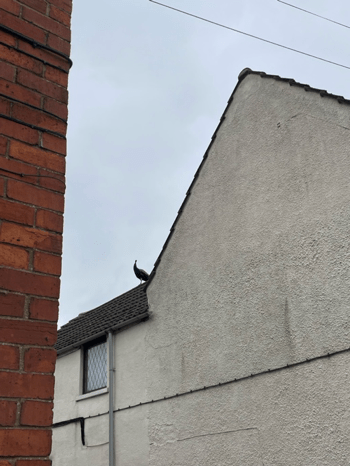
Myths about peacocks connect them to good fortune, to protection; these birds are symbols of immortality. We come across the flock as we are making for stop number 4, ‘The landscape of the departed’.
Funny, Mike never mentioned them… I wonder if me doing so robs the place of that element of surprise. I’ll leave it in though… Maybe it’ll encourage more folk to follow on.
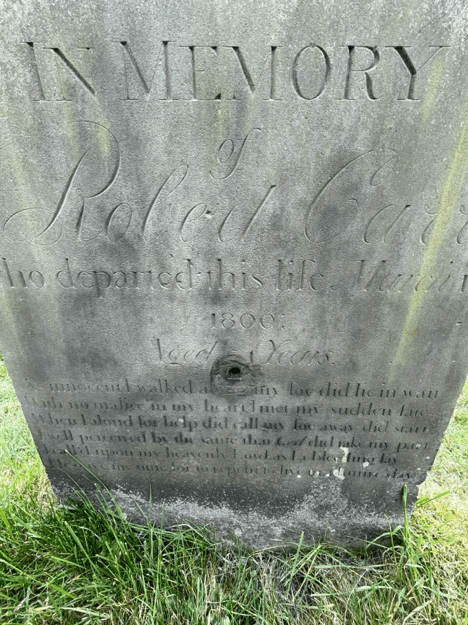
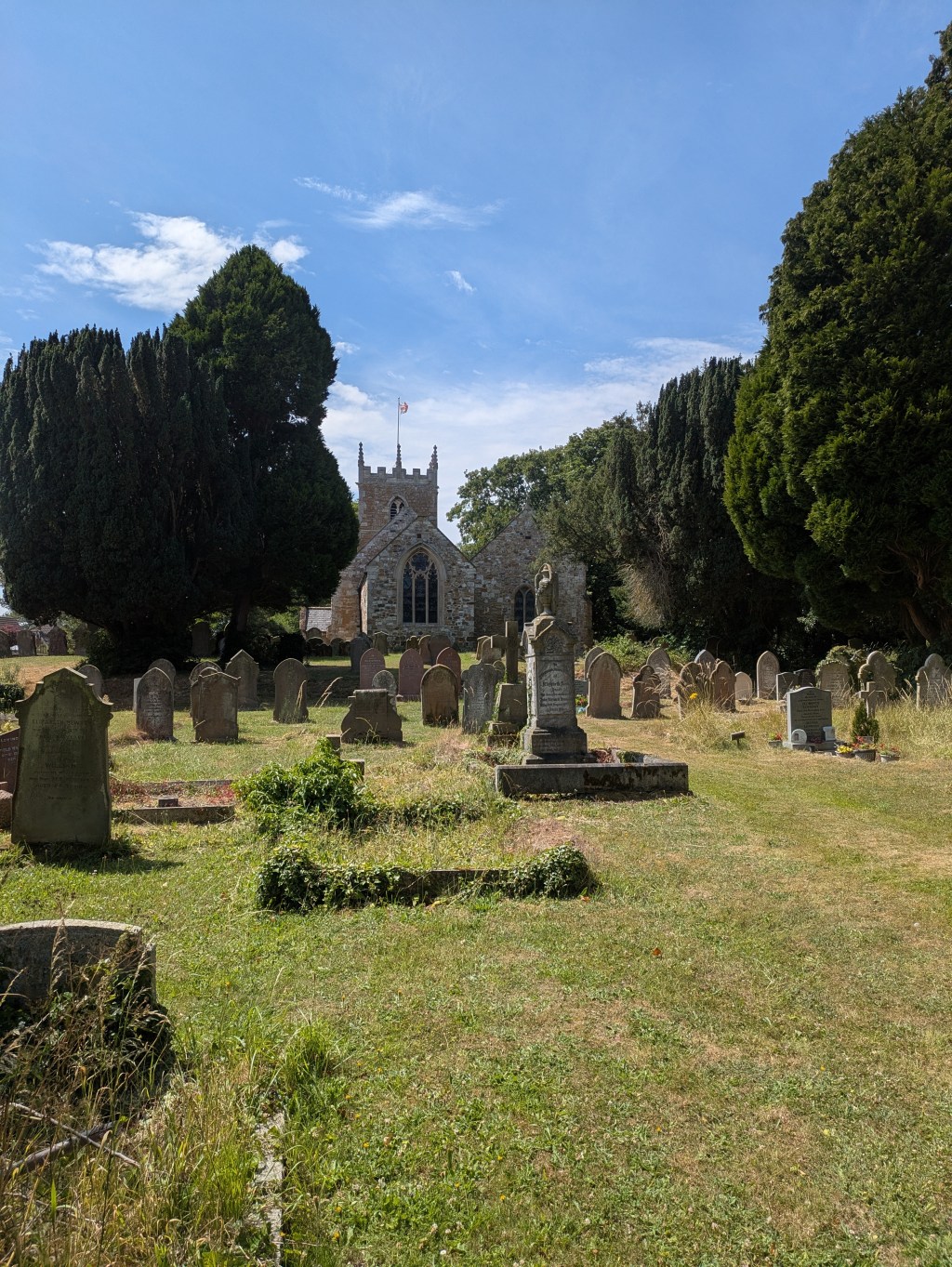
And we continue to follow on ourselves, with Mike’s instructions. Here in the boneyard of St Hybald’s I impatiently read the words on the page before me and then we search for the right spot under the trees where they should have been offered up to the place. We scour the headstones looking for names mentioned, and for a particular hole. Legend lives in that little void in the stone. We laugh at the right points and we think on our own loss and mortality. I smile to myself, it feels like we are playing our part as participant performers perfectly.


We get to the 6th stop and I wish I had remembered to bring my wellies or had the time and the towels ready to paddle barefoot in the beck…It isn’t actually quite here that the picture of Deirdre Heddon (2002) was taken, replicating the picture of Mike from the performance (2000). But I like this spot, right now, with the first spring blossom fragrant on the breeze and the cow parsley just gaining a little height. I listen to the beck for a while before I start reading the words connected to this spot. I spy no sticklebacks, but it is yet a fraction too early for them to be blushing I suppose.
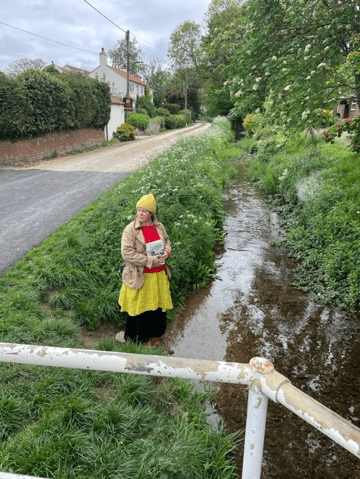
Down here I start, and then between here and the next stop the two of us converse, thinking about the development and building works that are evident across our country, visible here too. Where has the path been appropriated, carved up, claimed privately? Are there any places where it has accidentally or purposefully been returned to the public… In a landscape still haunted by enclosure, and so heavily mediated and manipulated by warping it is not perhaps unusual that this topic bubbles up.
We continue on our path as best we can and are guided through cowboy skirmishes, prize gardens plagued by cabbage whites, plough plays, industrial innovation, lost fields and the oldest surviving wall in the village. Navigating our way along, always revolving, satelliting around The White House. It is at the heart of the excursion, of the book, it is at the heart of the storytelling. My own heart tugs thinking of my own grandparent’s home, currently on the market back in Essex.
And then on again, to the final stop on our quest. The one that should get the heart pumping faster… through anticipation, through argument, through fear of mythical encounter. On to Bubbling Tom.
I have found one reference to Ethel Rudkin’s mention of a reputed spectral Black Dog that guards the spring. But to date I have not found the root source, so perhaps don’t quote either Ethel or myself on that one yet. Still, best to tread carefully where a potential Grim or Shuck is concerned.
We get lost in a maze of early wildflower and old brambles, bugs getting caught in our hair. We chase up the rivulets and small tributaries of the infant beck, at the point before it is tamed into the channels that run through the village at large. This place feels wild, alive, whispering, on the edge of growling perhaps. In contrast with the epic fields and neat gardens, with the polished glare of a classic car on the drive. The well-fed crows now watch us in place of their peacock friends.
As is tradition, we fail to find the spring itself. We decide not to give in to argument as so often seems to happen (according to both Mike’s account and the conflicting directions from the locals we’d asked on our way).
In the performance named after the spring Pearson captures its magnetism:
‘They say if you ever drink from Bubbling Tom you’ll always come back. I don’t think I ever did… probably because I was never sure where it was.
All that’s left then is to have a big argument as to where it really is.’
He revisits the impulse in In Comes I (2006):
And with much hilarity, in the half light, a group of villagers and guests begins to search and point and offer authoritative and expert opinion – however contingent on being present here, tonight, having gone through a particular experience, having accumulated a certain kind of knowledge, having been given permission – at a place they have not visited for years, a place they may never have visited before.
Yes, rather than arguing we continue to talk about ownership of place… Most accounts agree that the spring sits on privately owned land. You can get close but not right to the source.
I have been researching Colchester’s holy wells and springs, and they have suffered the same fate. Being absorbed or aggressively asserted within privately owned pockets of land, being removed from public access.
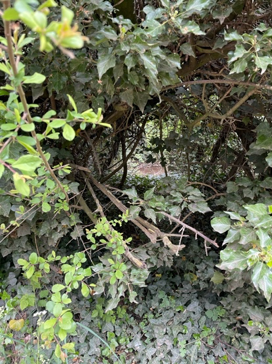

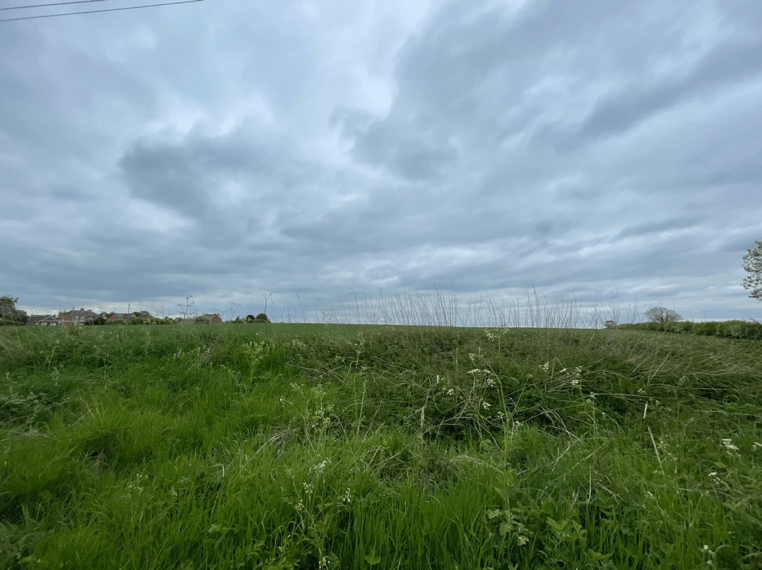
Best to let it remain a mystery in this case. To go on to the pub (where the barmaid also fondly remembers Mike) and discuss, both this conundrum, and our other findings. Perhaps dear reader, you may have better luck!
And in the spirit of Mike’s book… some parting provocations. As well as the excursions; which do a brilliant job at lifting away our assumptions about the mundanity of some of our less travelled places; he includes suggestions and details of the projects possible in these places.
So what might be possible here if we encourage folk to follow this excursion particularly, although the others are also worth exploring of course! Perhaps an annual large scale Lincolnshire Cowboys flash mob? Or even a new yearly tradition where epic poetic debate is held to decide where the exact location of Bubbling Tom might be…Clawing it back from private ownership…Deciding where we wish it to be for the course of that year.
Let us know if you follow the Excursion to Hibaldstow, if you have any other ideas for new stories and performances to be held in this place, inspired by Mike’s writing and by your own experiences as a figure in the landscape there. And, if you find it…if you manage to locate Bubbling Tom… perhaps keep its location a secret. But do tell how the water tastes… or if you are unlucky enough to encounter its spectral canine guardian.
Gemma can be reached at eastanglianfolklorecentre@gmail.com, and we at the Lincolnshire Folk Tales Project would also love to hear about your own deep maps. Get in touch!
Words and Images by GEMMA GARWOOD
The project is immensely grateful to Gemma Garwood for her contribution and for the excellent work she does at the East Anglian Folklore Centre. Our upcoming book event at the EAFC details can be found on our events page.
Additional Reading:
Pearson, M. (2006) In Comes I: Performance, Memory and Landscape. Exeter, University of Exeter Press.
Pearson, M. (2000) Bubbling Tom. Performed 25 April, on the streets of Hibaldstow.

 Lincolnshire Folk Tales Project
Leave a comment