


Opened in 1770, the Vine Hotel was purportedly frequented by smugglers well into the nineteenth century. During late-nineteenth-century renovations, a male skeleton is alleged to have been discovered, bricked into a cavity opposite the reception, alongside buttons bearing the Royal Insignia (or, according to some reports, wearing a full excise officer’s uniform). This has led to tales presupposing his (probable) grizzly demise, and reports of ghostly happenings. See, for example, here. See also Daniel Codd, Haunted Lincolnshire (2006), and Camilla Zajac, Lincolnshire Ghost Stories (2017).
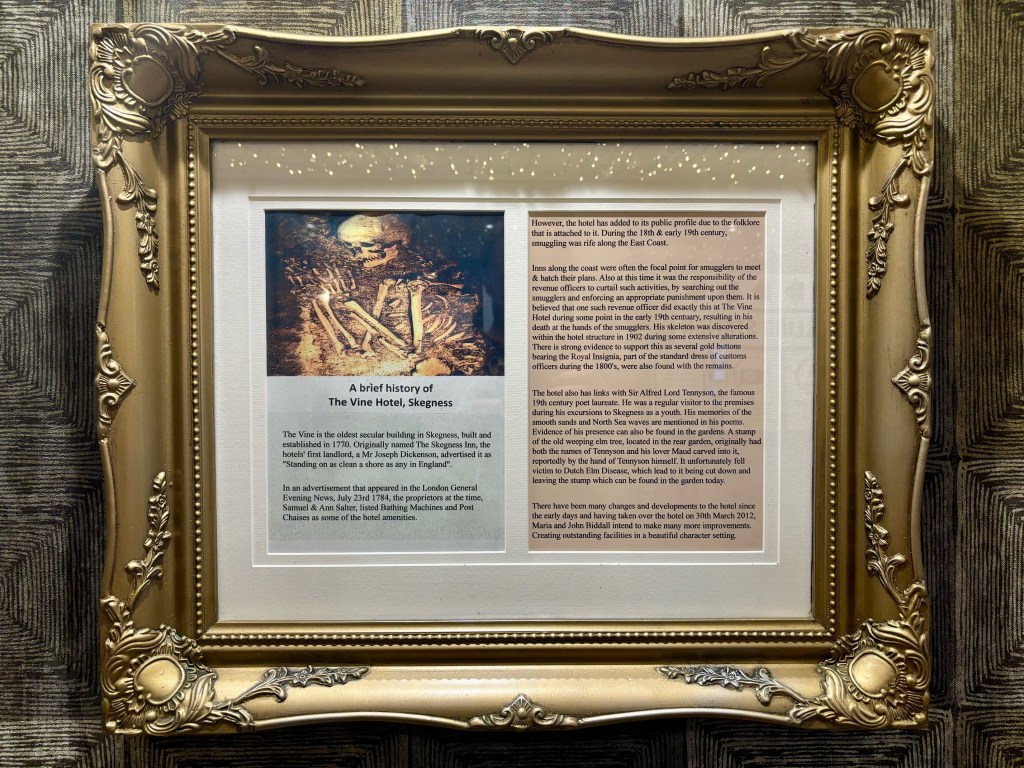
This stretch of coast was rife with smuggling well into the eighteenth century. The hotel displays information about the legend (below, pictured 2024). There is no tangible evidence that the man was an excise officer, and no buttons exist. Even the whereabouts of the skeleton is unknown. However, in the late nineteenth century, many skeletons were found bricked into buildings in the nearby (and then much bigger) market town of Alford, which was known to be a centre of smuggling. The About Alford blog is fascinating on this subject.
The 2022 winner of Write a Lincolnshire Song, ‘Brass Buttons’ by Peasants’ Revolt, tells the tale. The whole of the 2022 contest is available below, with the song beginning at 1 hour 8 mins 20 seconds.
Words and images by RORY WATERMAN





Leave a comment