Crowland Abbey & the Devil

It was 869, and the monks of Crowland Abbey – then on an island in the Fens – had allegedly taken to debauchery and blasphemy, despite the protestations of Abbot Theodore. Suddenly, the walls shook and Satan emerged from a cloud of smoke. He told the now cowering monks that God had given up on them, and that within a year the abbey would lie in ruins, then he vanished. Nothing happened for almost a year, but then a monk on lookout spotted boats snaking towards the abbey. These were Viking raiders, and Theodore was murdered along with eighty monks as they took mass – too little, too late, perhaps.

The Vikings did indeed plunder Crowland in 870. A skull, alleged to be Theodore’s, is kept in a glass case in a chamber above the Abbey porch. It was stolen in 1982, and returned anonymously almost two decades later. Susanna O’Neill discusses the legend in Folklore in Lincolnshire (2013), as does Polly Howat in Ghosts and Legends of Lincolnshire and the Fen Country (1992).
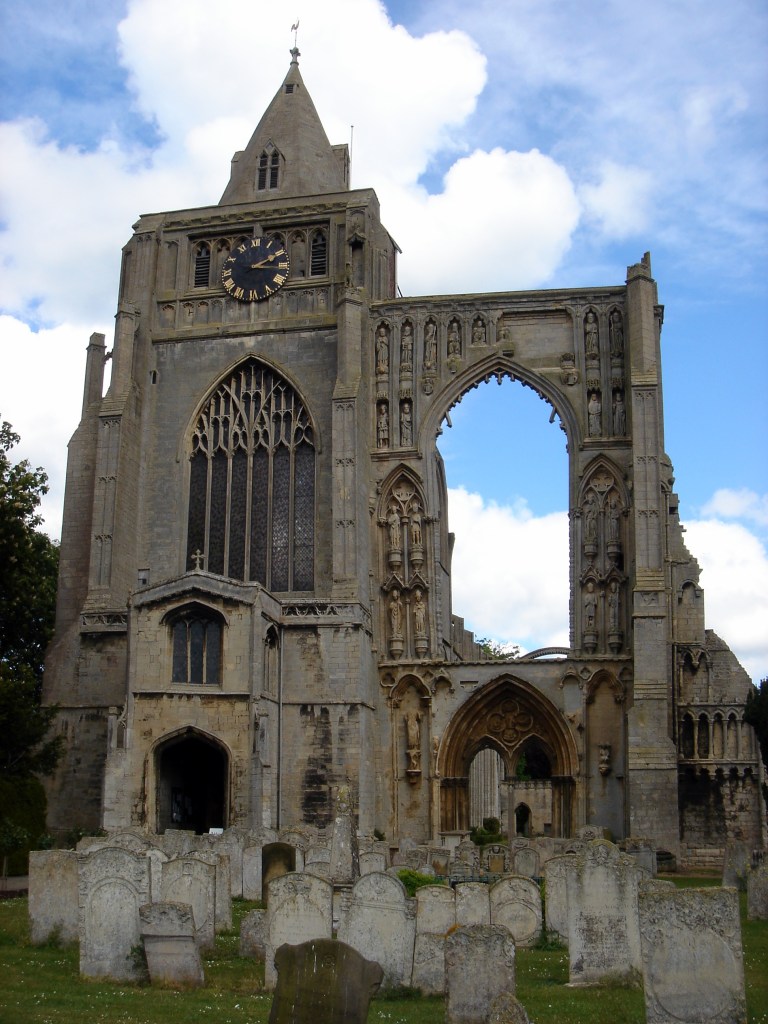
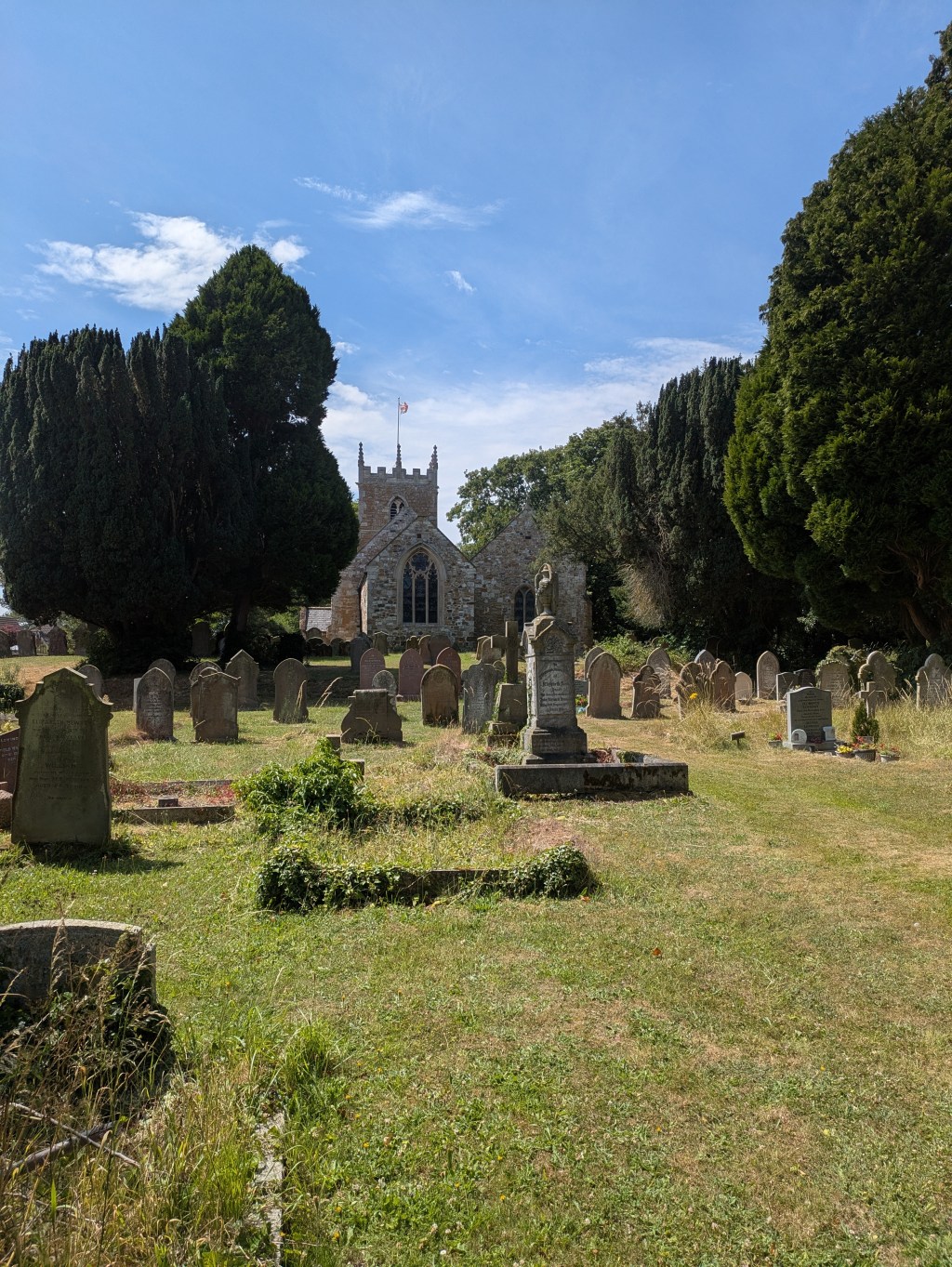
Image by Thorvaldsson – Own work, CC BY-SA 3.0, https://commons.wikimedia.org/w/index.php?curid=6804002

Words by RORY WATERMAN

4 responses to “Crowland Abbey & the Devil”

  1. I’ve often wondered about that skull. Has anyone ever been able to provide a plausible narrative for how it came to be preserved, when every other saintly relic at Crowland (and there must have been plenty) appears to have been lost after 1539? For clarity, I’m not here to cast doubt on it, so much as to learn more about its story.

    Liked by 1 person

    1. That is an excellent question. The relics were indeed numerous, chief among them the body and scourge belonging to St Guthlac, the abbey’s patron, and the Virgin Mary’s hair. Curiously, the c. 14/15th century preudo-chronicle, ‘Kenulph’s Croyland Chronicle’, mentions Theodore but not his relics.

      Because part of the abbey continued as a parish church after the Dissolution, the skull might have survived by being overlooked or even preserved by local parishioners, but I (Anna) have not been able to discover any more details.

      If you find more info, I’d love to hear about it.

      Liked by 1 person

      1. I went to the abbey today and saw the skull on display. Apparently it was discovered buried with the other monks and as Theodore was supposedly stabbed in the head the skull was sent to London museum for examination. It was from a man of his age at death and other clues pointed to it being him.

        Like

  2. Ditto!

    Despite having done a lot of work on the history of Crowland, I’ve yet to spot any reference to a venerated skull of St Theodore either prior to the dissolution of the Abbey, or indeed afterwards, eg in antiquarian accounts (Stukeley, Spalding Gentleman’s Society, Richard Gough etc). It would be interesting to learn when it first turns up in the records.

    Even fairly enthusiastic protestant reformers tended to agree that best practice for venerated body parts (as opposed to images or secondary relics) was to bury them in an unmarked spot so that they would no longer be susceptible to “superstitious” uses. It’s conceivable that this was the case with St Theodore – and that his skull was either hidden away at that point (“yes, your worship, of course I buried that ole thing, why do you ask?”) – or perhaps buried but then recovered later. On a related note, the skull might have been discovered during work in the churchyard (a great deal of which has gone on over the years) and been assumed, by antiquaries or others, to relate to St Theodore, because of that massive sword wound – although NB at least nine brethren of the proto-abbey were martyred in 869/70, so Theodore was hardly unique in that respect – and then retained, either for devotional reasons or as an historic curiosity.

    Someone must know something!

    Finally, I am very much enjoying exploring this website. It’s a really worthwhile enterprise. Congratulations on it!

    Like

Leave a reply to Barendina Smedley Cancel reply

About the project

‘Lincolnshire Folk Tales: Origins, Legacies, Connections, Futures’ is a project funded by the Arts and Humanities Research Council (grant number AH/Y003225/1), and is led by Dr Rory Waterman and the Research Fellow Dr Anna Milon in the School of Arts and Humanities at Nottingham Trent University. The project explores the origins, legacies, intertextual and social connections and futures of Lincolnshire folk tales (LFTs), and is intended to facilitate wider engagement with this heritage from writers, the general public, and scholars.

Recent Articles