


Is a wholly true story a folk tale? Well, no, not according to most definitions – but what if that story involves a folk hero? And what if that folk hero isn’t human, and is personified in literary accounts, requiring extrapolation akin to that common in legends?
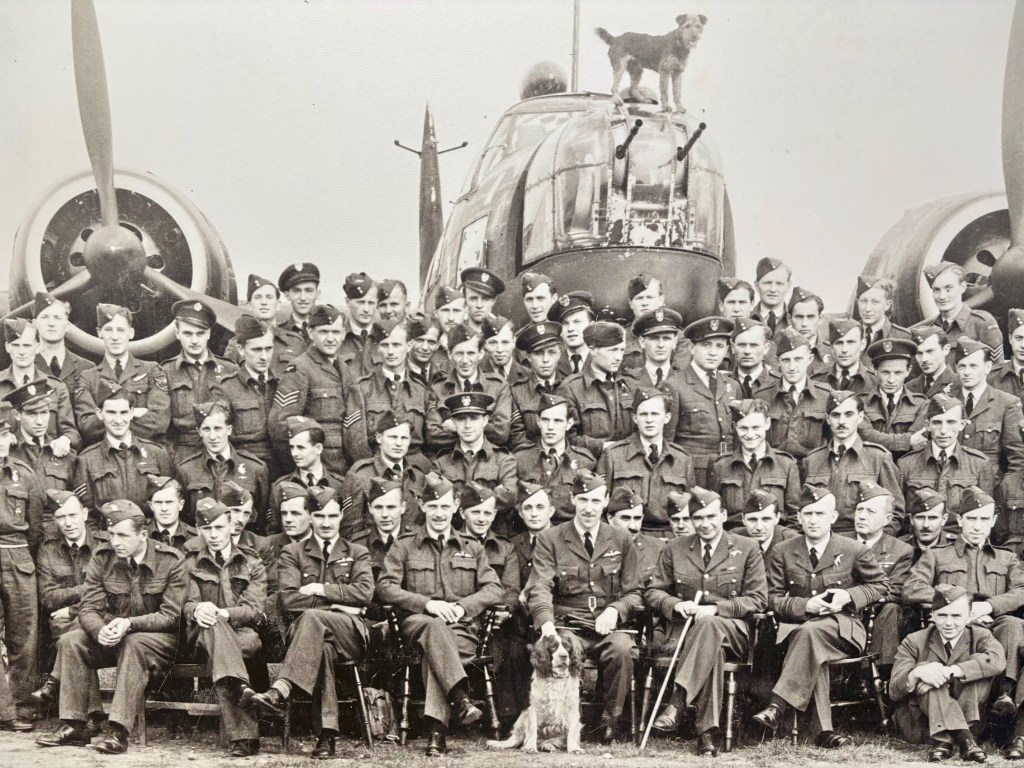
Ciapek was a small stray dog found near RAF Ingham, which was home to five Polish Air Force squadrons at different times during the Second World War. He became the mascot of 305 Squadron, and accompanied them on eight successful missions, aboard a Wellington bomber, in his own bomber jacket and oxygen mask. Video footage (which can be seen at the excellent RAF Ingham Heritage Centre) shows him ferreting in boots, then happily jumping on the shoulders of a crew member and wagging his tail as he is carried aboard. His collar was inscribed with the station’s name, and a wooden bomb was added to it after each return to base.

On the ninth mission, however, disaster struck. Ciapek’s aircraft was shot down over the North Sea. He was presumed dead – dogs aren’t very good (woof) at deploying parachutes – but washed up alive on the English coast, was identified by his collar, and returned to his Polish human friends at RAF Ingham. This cemented his status as a symbol of endurance and hope.
The Polish-British author Wojciech Filaber’s Ciapek, the Co-pilot Dog (Biddles, 2022) is a novelistic account of his story written for children. It’s lovely. RAF Ingham Heritage Centre opened in 2024, and is well worth visiting. You can buy the book there, too.
Words by RORY WATERMAN


 Lincolnshire Folk Tales Project
Leave a comment