


RAF North Witham was established in 1942, and closed in 1960. It encroached upon what had been Twyford Forest, and after the closure of the base the Forestry Commission took it back over and planted thousands of trees. This has created a beautiful, unusual composite: increasingly mature woodland grows thickly around increasingly crumbling and buckling Second World War runways, perimeter tracks, and hard-standings for aircraft. There is also evidence of much earlier infrastructure on the site, including a Romano-British settlement, a medieval moated enclosure, and an Iron Age metalworking site, as you can see on the Lincolnshire Heritage Explorer website.
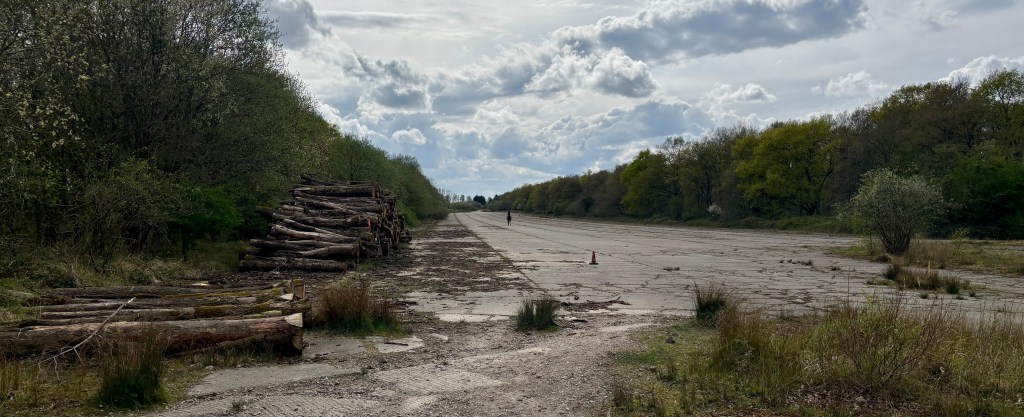
It is hardly surprising that ghost stories abound, some of which are covered here on the British Hauntings, Histories and Investigations YouTube channel. They include a man at the control tower (which still stands) who vanishes. All amount to small memorates, but they are numerous, and some are still told locally. It is from such memorates that folk tales often develop.
Former RAF North Witham is easily visited. There’s a little car park, signed Twyford Wood, just off the A151 between Colsterworth and Corby Glen. Just south of the car park, you’ll find an information board outlining the base’s history. Public access is granted to the runways and tracks around the site, unless marked otherwise, but care should be taken over personal safety, and obviously you should leave no trace, and respect what is essentially a huge memorial site.
Words by RORY WATERMAN

 Lincolnshire Folk Tales Project
Leave a comment