


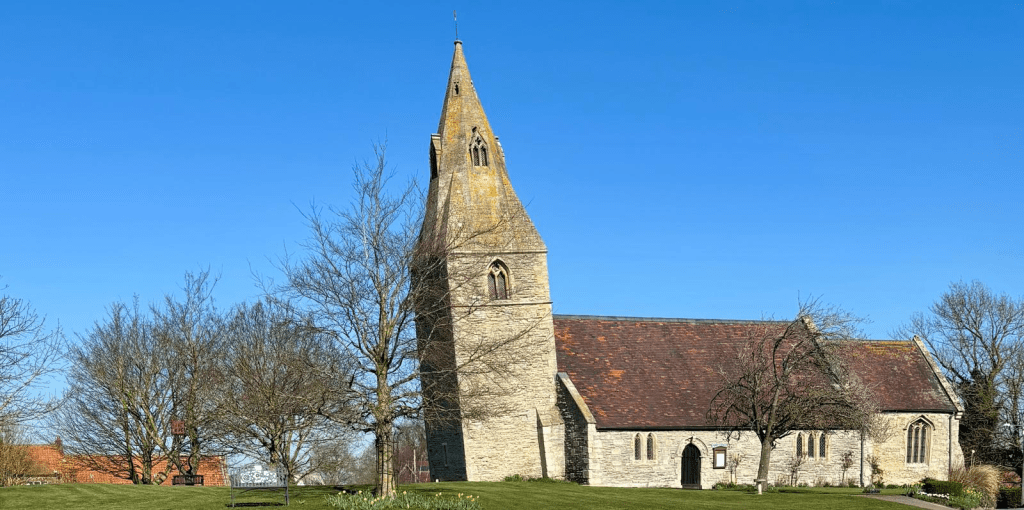
Our research hasn’t discovered many extant folk tales in this part of the county, as you might have noticed from the map. However, the pretty hilltop village of Dry Doddington has the makings of one.
St James’s dates from the twelfth century, and has a fourteenth-century tower that leans approximately five degrees, more than the Leaning Tower of Pisa. Nobody knows when it started to lean, but it is stable, and has subtly been pinned in place to prevent it from falling over. The church isn’t always open, but if you can get inside (locals will often help) you’ll notice that most of the columns and walls aren’t especially vertical either.
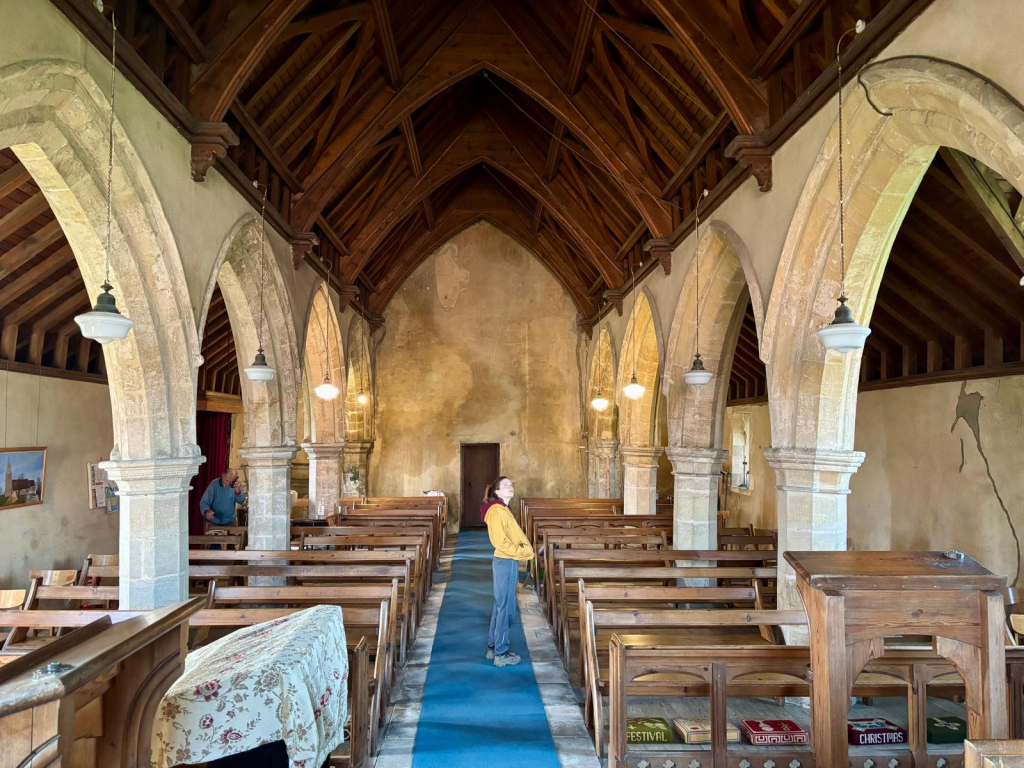
We know why Pisa’s campanile leans (shallow foundations in soft soil), and the history of that lean is thoroughly documented. Unsurprisingly, records for St James’s are rather less thorough. Needless to say, small stories abound to fill that gap. One is that bodies were buried around the end of the tower during an outbreak of plague. Bodies decompose, leaving unstable or rutted ground, and therefore the tower is said to have pivoted. Another legend has it that the church was built on a heathen mound, and that the lean is the supernatural consequence of disturbing sacred soil. It is an English folkloric trope to attribute unusual phenomena to conflict between old and new beliefs. There is no evidence of a pagan burial site here, nor of a plague pit.

The above explanations are highly speculative, but they do have the makings of a folk tale, don’t you think? They have left no notable literary legacy, but have been passed down orally, and still are.
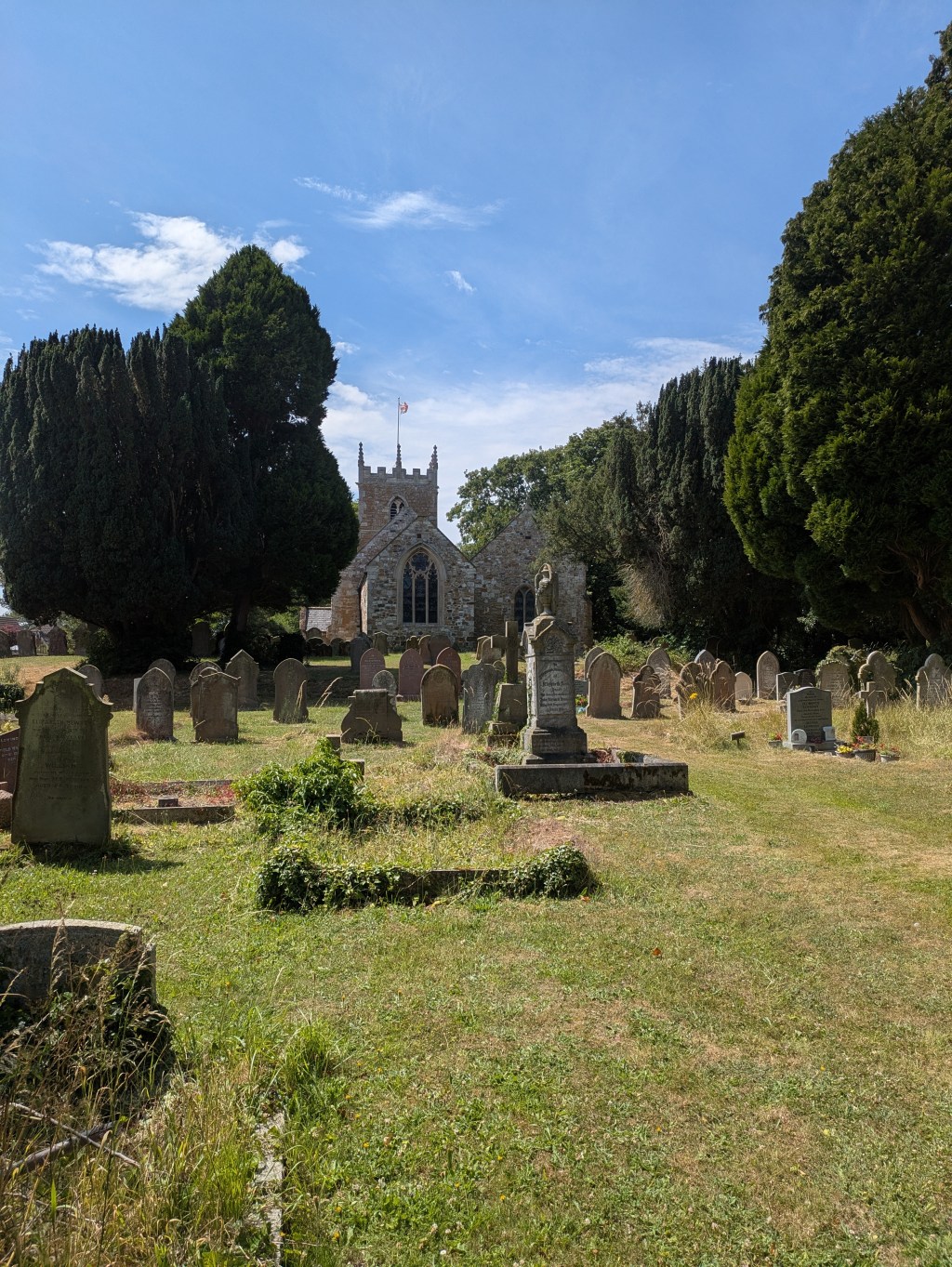
For more information about the church tower, click here. For a completely different village church experience, head north a mile or so to St Peter’s in Claypole, which contains over 300 examples of medieval and early modern graffiti etched into its walls.
Words and images by RORY WATERMAN

 Lincolnshire Folk Tales Project
Leave a comment