

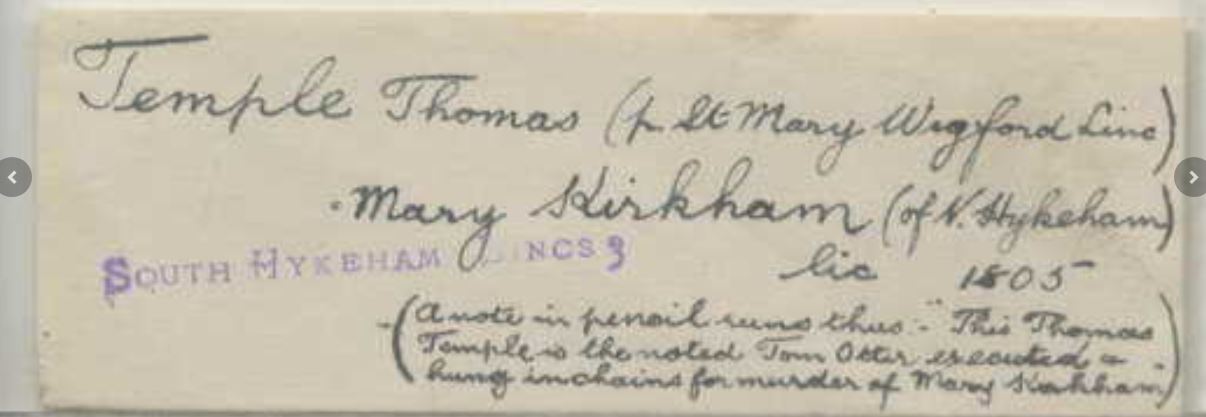
The tale of Tom Otter is one of the grisliest stories featured by the Lincolnshire Folk Tales project. The historical event fit for any true crime podcast had its own mythology grow up around it, fed by nineteenth-century audiences yearning for the macabre. Otter, a young navvy (or, in local vernacular, banker) working near Lincoln, was accused of bigamy and of killing his pregnant second wife, Mary Kirkham, with a hedge-stake at Drinsey Nook near Saxilby. His plight is discussed in our folk tale map post here.
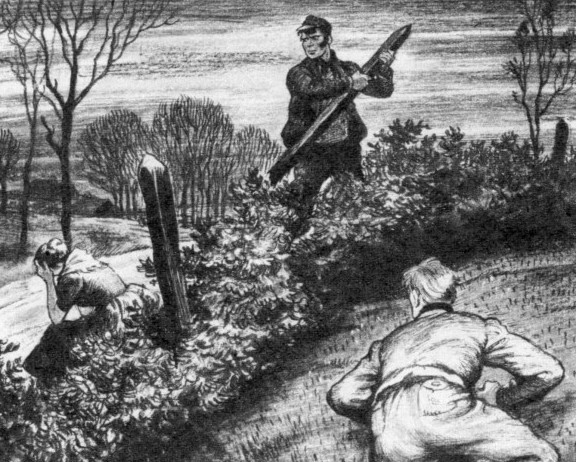
But could he have been wrongfully accused? Author Anne Zouroudi explores that possibility in her contribution to the Lincolnshire Folk Tales Reimagined anthology, ‘Last Rites or the Tale of Tom Otter’. In the below extract from her story, Zouroudi imagines the impact Tom’s execution and post-mortem desecration may have had on his family:
Rawlinson picks up the box, and shows its contents to Miller, who gasps in disgust and turns his away his face. ‘For God’s sake man! What are those?’
‘As my poor grandfather rotted in his cage, his bones fell to the ground below. Some were scavenged by foxes and rats, and others – the larger leg and arm bones for example, and the skull – were claimed by souvenir hunters, to sell or keep as morbid mementoes. But great-grandfather Robert was determined to do what he could to salvage his son’s remains. Whenever he could visit the site, he searched the ground beneath the gibbet, crying and lamenting as he dug in the dirt with his bare hands. His findings are what you see here: a pitiful collection of finger-bones, a shoulder, ribs and pieces unknown, along with a few teeth that fell from the jaws. All he found he kept in this casket, made with his own hands for the purpose. This box is what we, as his family, would like to have interred in hallowed ground.’
The image of the dead man’s father crawling around in the mud, digging for his son’s bones, makes Miller shudder.
But Cousans looks steadily at Rawlinson. ‘I see what you want. You’re asking us to issue a retraction. But the Lincoln Chronicle is not in the business of retractions. You publish a story one week and go back on it the next, people think you’re printing garbage. Sales suffer.’
Zouroudi’s compelling use of imagery strikes to the heart of the matter – that Tom Otter’s legend, which is what most readers will be familiar with, was formed by individuals whose chief concern was selling a story, not unearthing the truth. Meanwhile, the historical Tom himself, and especially his alleged victim Mary Kirkham, are obscured by layers of sensationalised narrative until all that remains of them are folklorised caricatures.
Last Rites or the Tale of Tom Otter is included in the Lincolnshire Folk Tales Reimagined anthology, now available for preorder here.
Words by ANNA MILON, with ANNE ZOUROUDI
The Lincolnshire Folk Tales project warmly thanks Anne Zouroudi for her contribution to Lincolnshire Folk Tales Reimagined, and permission to reproduce the above excerpt. You can find Anne’s other work on her website: annezouroudi.com, and can order the anthology here.
 Lincolnshire Folk Tales Project
Leave a comment