


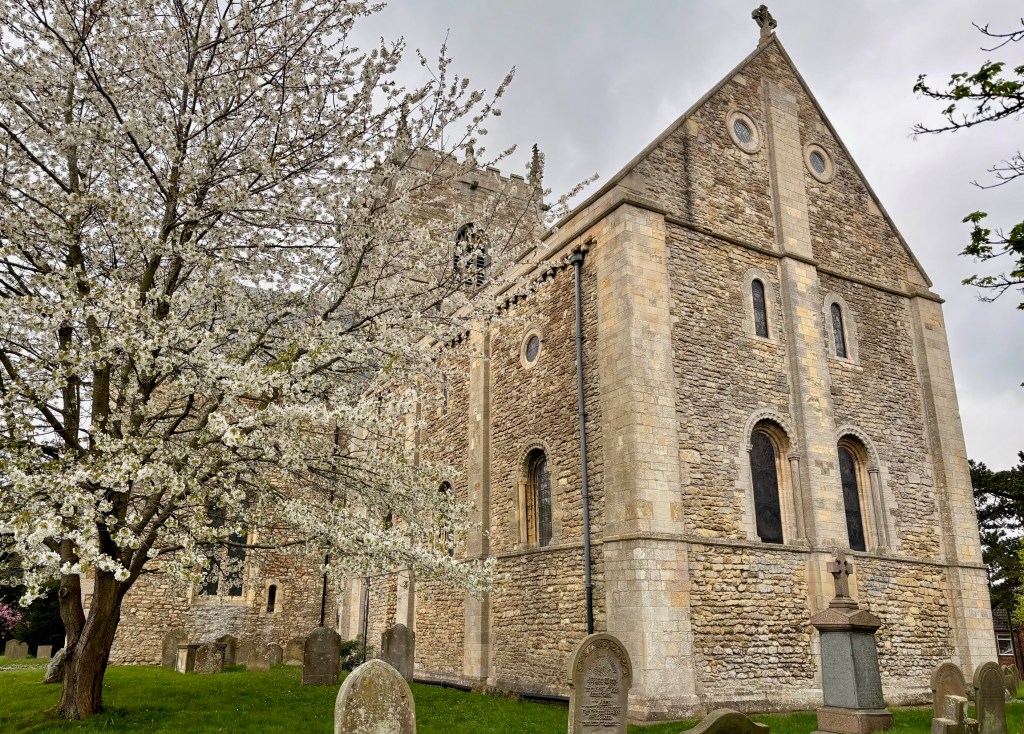
The Minster Church of St Mary, Stow, was first built in the 970s, about a century before the Norman Conquest and the first work on Lincoln Cathedral. It served as a regional mother church for a huge diocese that had its seat in Dorchester on Thames, until that was moved to Lincoln by the first Norman bishop, Remigius, in 1073. The original building burned down in the early eleventh century, and was quickly rebuilt; much of what can be seen today dates from about 1035-40, and most of the rest of the building is early Norman. It is big, ancient, and beautiful, and does not receive many visitors, though it certainly deserves to.
Inside, among many other things, you’ll find fifteenth-century pews, Anglo-Saxon, Norman and Gothic architectural features, and a Victorian stained glass window depicting a local version of a common legend, outlined below.
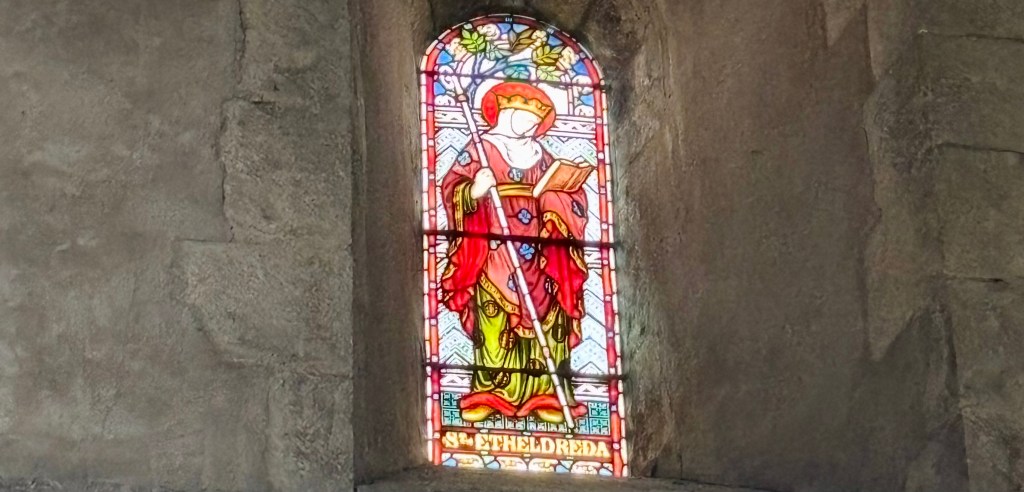
It is possible that an earlier Saxon church stood on the site, or nearby, though there is no evidence to prove it. According to legend, the seventh-century St. Etheldreda (also known as Æthelthryth or Æðelþryð, and in religious contexts as Audrey) stopped at Stow on her journey from Northumbria to the Isle of Ely, to where she was fleeing in order to become a nun. She planted her ash staff in the earth, and it allegedly transformed into a mature, foliage-rich tree, giving her shelter. A church was then said to have been built here in commemoration of the miracle. This story is told in information leaflets and boards available in the church, and on the Stow Minster website, as well as being depicted in stained glass high on the north side of the chancel, above the main altar.
Words by RORY WATERMAN

 Lincolnshire Folk Tales Project
Leave a comment