


One (spurious) explanation for the etymology Maidenwell, recorded in a reader’s letter in the magazine Lincolnshire Life (1975), is that a young woman was thrown down a well by Cromwell’s soldiers. Ethel Rudkin (1936) includes this brief entry: ‘In Ostler’s Lane there is a haunting – a coach and horses goes by, and the coachman has his head on the box beside him.’
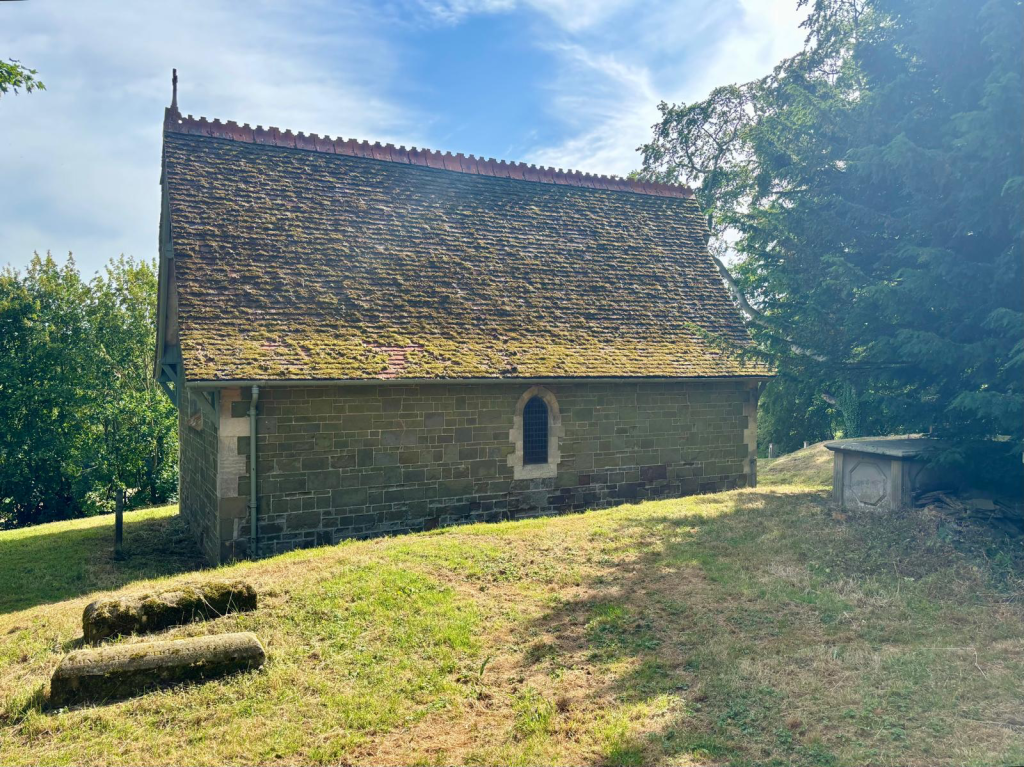
What Ruskin calls Ostler’s Lane is marked as Oslear’s Lane on Ordnance survey maps. The area is depopulated, and there are some interesting earthworks of abvandoned buildings and villages within walking distance. The parish church is St Olave’s, Ruckland, the smallest parish church in Lincolnshire, about half a mile south of Oslear’s Lane.
Phantom coaches, headless horsemen: this is the stuff of folk tales, but we know of no extant ‘proper’ folk tale about this example, and would therefore not normally add this to the Folk Tale Map. However, the Louth-based poet Robert Etty includes a poem about it in the anthology Lincolnshire Folk Tales Reimagined, edited by Anna Milon and Rory Waterman (Five Leaves, 2025).
Words by RORY WATERMAN

 Lincolnshire Folk Tales Project
Leave a comment