

With the School Summer Holidays just around the corner, the countryside has finally (mostly) shaken off the pall of rain and is a pleasure to be in. Below, Lincolnshire Folk Tales Project’s Postdoctoral Research Fellow, Dr Anna Milon, provides five suggestions for family-friendly walks – four in the woods and one by the sea – that let you make the best of some of Lincolnshire’s natural beauty and learn a little about the legends that surround them.

- The Lindsey Leopard (oh, almost everywhere, but we’ve picked Stapleford Woods, north-east of Newark)
Let us start in Stapleford Woods, in the South West of the county, and shared with Nottinghamshire. Just east of Newark-on-Trent, this woodland is managed by Forestry England and offers walking trails, picnic spots, and a convenient car park located off Coddington Lane that runs through the heart of the wood. The surfaced easy-access White Trail is navigable with prams and is sure to treat you to delightful views.
But if you fancy risking an encounter of a different kind, cross the main road from the car park, go up Grange Drive, and take a left at the first crossroads. It is in that stretch of woodland that one recent visitor spotted (and photographed!) what he thought might be the elusive Lindsey Leopard. Sightings of this large feline started around the 1990s, peaking in the 2000s, with mauled livestock and enormous paw-prints compounding the legend. Though named after Lindsey, the North Eastern part of the county (and in days past, the Anglo-Saxon Kingdom of Lindsey or Lindesege), the leopard is quite the traveller. It has been spotted all over the county, as far from here as Louth and Gainsborough.
Why not go leopard-spotting on a weekend, and perhaps you can snap a better picture than this blurry shot. Who knows? We don’t. Take catnip. - The Irby Boggle (near Grimsby)
The Irby Dales Wood lies outside Grimsby in the North West of the ceremonial county. Legend has it that on All Saints’ Day (November 1st) 1455, a young couple went missing in these woods. Their names survive to us: Rosamund Guy and Neville Randall. Rumours went round that Neville killed his paramour and fled, and that Rosamund’s father swore that she would haunt the woods for five hundred years unless he was brought to justice. Some say she is there still – her ghostly shape has allegedly been seen by visitors flitting through the trees, and a woman’s skeleton was supposedly unearthed under a tree in which the initials RG and NR had been carved, though the tree has gone now. Would you dare confront Rosamund’s despondent ghost? Or even look for her?
There is a number of trails through and around Irby Dales that offer beautiful, unspoilt views of woods and farmland. These woods are popular with families who have furry companions, and are laid out on AllTrails. The Lincolnshire Wildlife Trust offers occasional guided wildlife walks through Irby Woods, which are suitable for families and are advertised here. - The Hardy Gang (near Wragby)
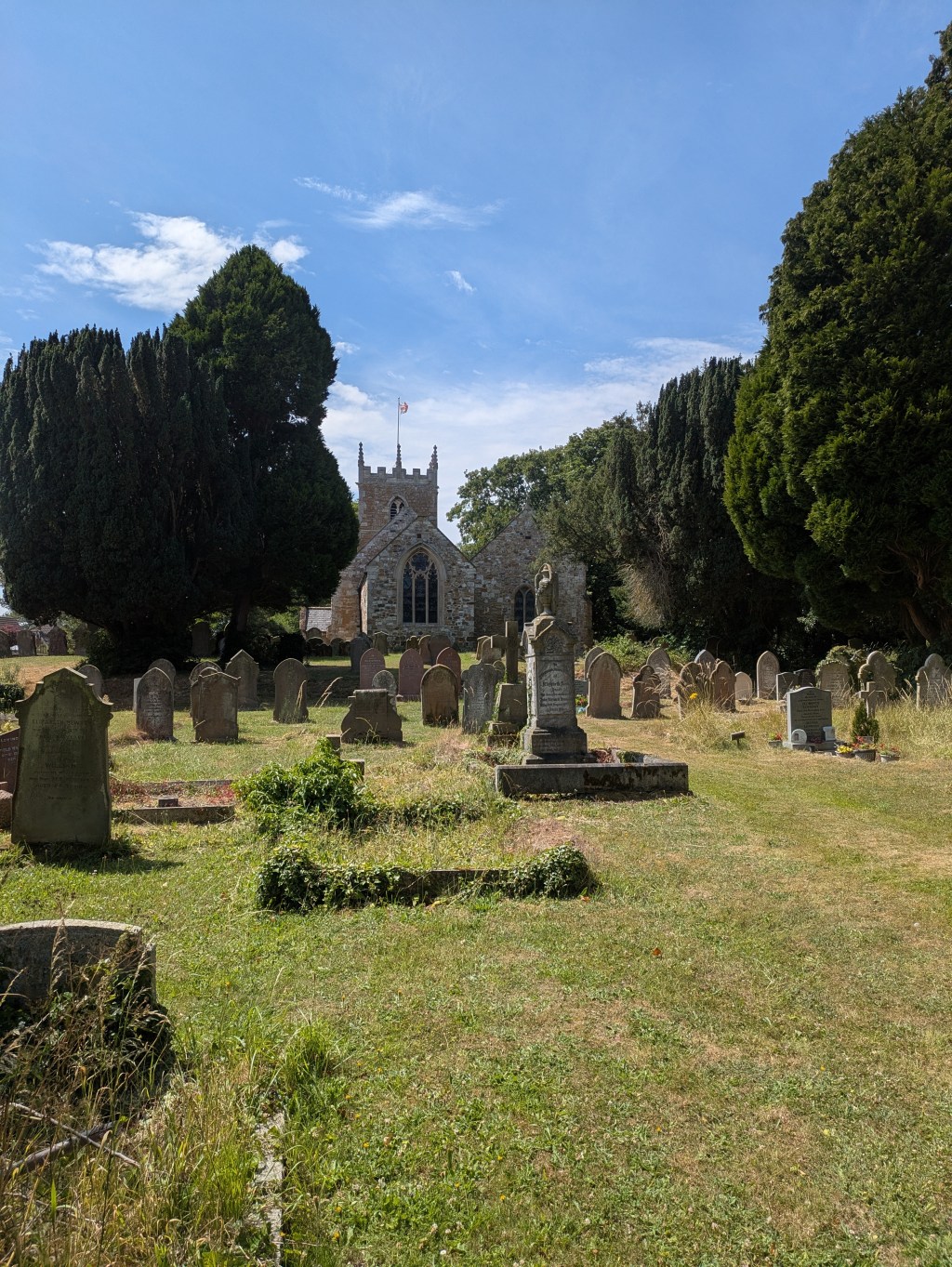
A woodland to the North East of Lincoln, near Wragby, gets its name from the Hardy Gang, a group of farmers who supposedly rid the countryside of a wodewose or wild man, who stole livestock and terrorised local families. They are said to have hunted him through the limewoods between Langworth and Stainfield, which now bear their name. The Wild Man himself is commemorated in Stainfield Church, and you can read more about him in this blog post.
The woods are managed by the Woodland Trust, and a short walk starting out in Stainfield village is plotted out here. The church in Stainfield is both beautiful and unusual, and most of the other limewoods in the area are easy to visit. There is a butterfly garden at Chambers’ Farm Wood, which is the biggest woodland in the area, and was the setting for project lead Rory Waterman’s rendition of the folk tale ‘Yallery Brown’, which comes from Redbourne in the north of the county. - Nanny Rutt (near Bourne)
This route takes us into the domain of a ghastly crone, Nanny Rutt, in Math Wood near Bourne. According to one version of the folk tale, a young woman planned to escape her wicked parents and meet her lover near a well in the woods. She arrived at the appointed hour, but her lover was nowhere to be seen. Tired of waiting, the young woman went looking for him, but instead found a dimly lit cottage with a crone on the doorstep, her face veiled with a shawl. The young woman approached, but then noticed the crone’s hideous visage and drew away in fear. She ran back to the well, and stumbled over her lover’s cold body. After that night, legends holds, neither the lovers nor the crone were ever seen again.
Nanny Rutt’s Well, where the lovers supposedly met their grim end, is an artesian spring in Math Wood, though its existence is debated since keen explorers seem unable to find it. Could you be the lucky discoverer of Nanny Rutt’s Well? If not, Math Wood, an ancient woodland looked after by the Woodland Trust, is famous for its carpet of bluebells. Bourne Wood, nearby, is bigger and also has plenty of trails. - Gibraltar Point Fog Horse (near Skegness)
The story goes that when the fog rolls in from the sea, the sound of a galloping horse hooves can be heard in the vicinity of Gibraltar Point, sometime growing near, and sometimes far, circling in a confusing, almost fey manner. Allegedly, some three hundred years ago, a farmer on his way to Skegness Market tried to take his horse on a shortcut along the beach at Gibraltar Point. The day was foggy, and the farmer lost his way in the mist and drowned in the rising tide. Since then, the frenzied sound of horse-hooves can supposedly be heard on that beach when the fog is thick.
On clear days, though, Gibraltar Point transforms into a stunning vista of salt-marsh and sand dune, stretching between Skegness and the Wash. Gibraltar Point is a nature reserve managed by the Lincolnshire Wildlife Trust. In summer it is perfect for watching little terns exercise their expert fishing craft, as well as offering creative workshops, guided walks, and activities for children. You can find more information about what’s on here. Most of the site’s paths are accessible to wheelchairs, pushchairs and mobility scooters.
Words by ANNA MILON
Do you have any favourite walks associated with folk stories? We’d love to hear about them! Get in touch here.
 Lincolnshire Folk Tales Project
Leave a comment