

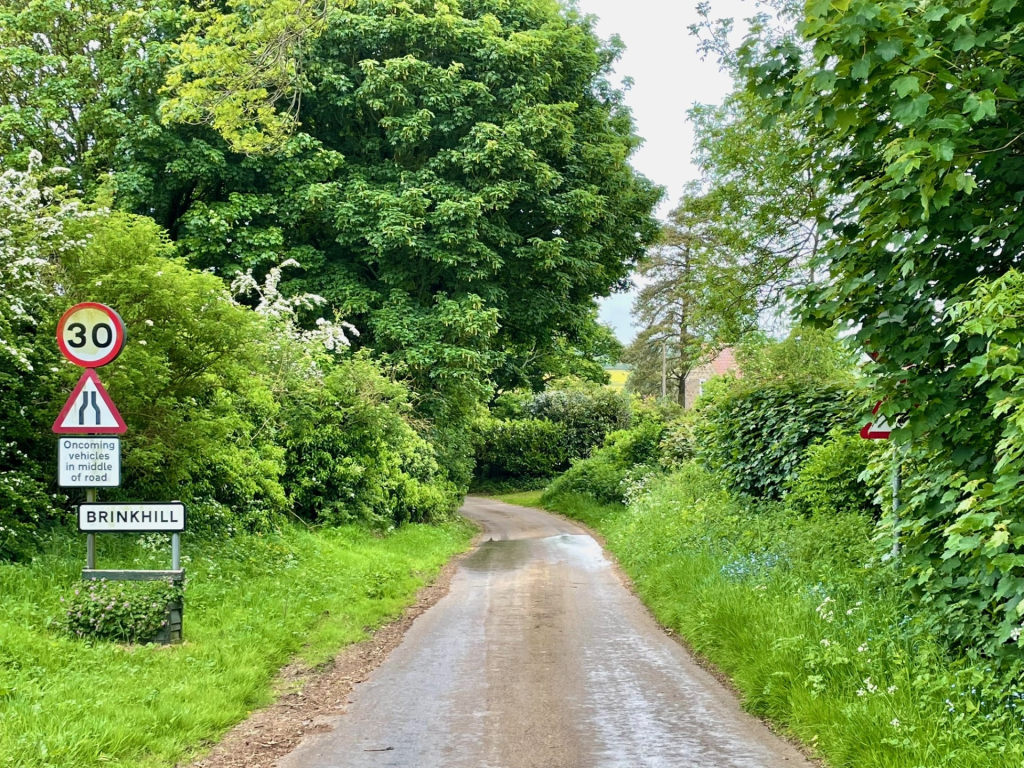
An unexpected discovery in Brinkhill, East Lindsey in the early 17th century led to the Tudor Gold Rush. Or rather, an interest in prospecting that seemed not to spill beyond the local area, but quickly became mythologised.
After a bright yellow mineral was found in the clay deposits around Brinkhill, a myth spread that the mineral in question was, in fact, gold. Locals flocked to the area looking for quick profit. But something else seemed to have fuelled the legend, expanding it from a small prospecting venture into the ‘Tudor Gold Rush.’ Raymond Pimperton, in his deep dive into the topic, speculated that the rumour of genuine gold may have been prompted by the unearthing of a treasure hoard, the Wolds being rich in mounds that often contain such things. But the theory did not bear out. The prospectors’ dreams were to be dashed into smithereens.
Marcasite or pyrite of iron is a combination of iron and sulphur better known as fool’s gold. And that is exactly what was found in the fields around Brinkhill.

Herbert Green writes that, though none has been found in recent years, some has been discovered before ‘a little way above the [former] grocer’s shop, when making some deeper grips that usual in order to drain some roads and fields.’
Still, local place names help perpetuate the story. An 1826 map shows a Gold Pit on the eastern side of Brinkhill, and the Brinkhill Historical Society mentions several locations with names like Gold Hole and Goldfield.
Have you heard of Brinkhill Gold, or seen other signs of the Tudor Gold Rush? Get in touch to tell us all about it.
Though Brinkhill did not rise to rival California in its gold deposits, it is nonetheless a place rich with archaeology. The remnants of a Roman road run through the village, visible from aerial photography north of Brook Farm. The settlement is first mentioned in the Domesday Book, and medieval features are evident throughout, from ridge and furrow found during a proposed waterworks survey to a medieval ditch containing sherds of 11th and 12th century pottery.
You can find the Monument Record and map of some of Brinkhill’s historical features on the Lincolnshire Heritage Explorer website:

This post was made possible through the generous help of and a treasure-trove of information from DAVID START and TONY BAKER, and was written by ANNA MILON.
 Lincolnshire Folk Tales Project
Leave a comment