

Dragons! Who doesn’t love dragons? As a boy, I battled them in dreams. As a teenager, I revelled in cryptozoology and Tolkien’s writing. And as an adult fleeing London, yomping with terriers across the otherworldly Lincolnshire Marsh, I was delighted to discover that even in so unpretentious a place there might be monsters.
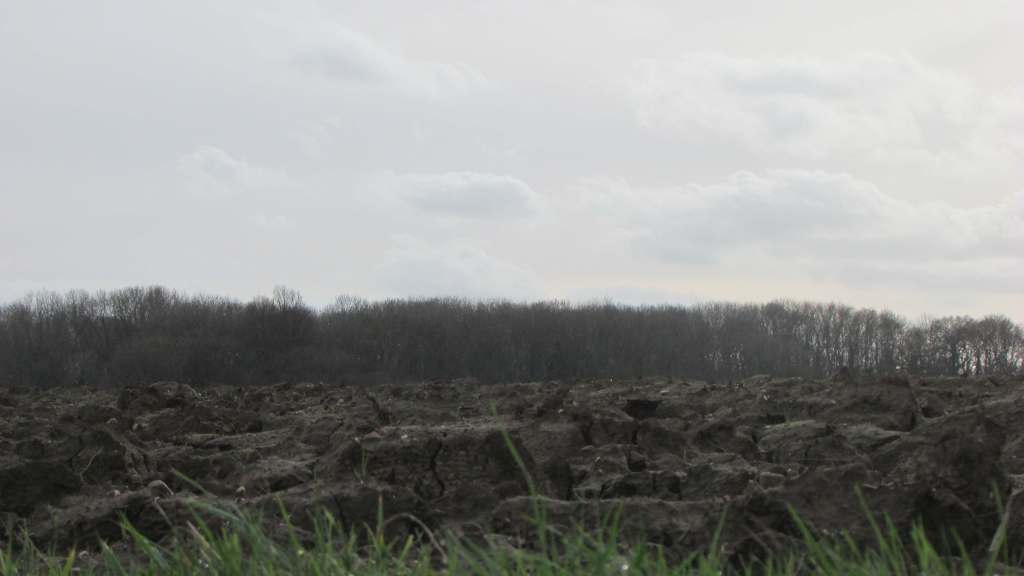
My latest leviathan coiled legendarily around a prominent lump in the landscape, lost among lush grasses browsed by Lincoln Reds – an oddly circular motte, studded with ash and oak, with rooks rising up as I crossed the ramshackle bridge to look closely. The ex-castle impressed even in death, showing striking evidence of ancient energies in its laboriously piled-up earths and deep-delved defensive ditches. Now fungus, moss, nettles, deer-slots, fox scat, wood pigeons exploding out, and a woodcock zigzagging away between trees – what would the motte’s ambitious erector have thought of such an upsetting of his arrangements? But then Normans knew that underneath even their most brusquely determined actions was always unsettling and dangerous Nature.
What better way for a medieval knight to prove his martial prowess, moral worth, and entitlement to an estate than by besting a Beast – a symbol not just of Evil, but also primordial Chaos – a fell creature whose fall would allow for a Biblically-ordained and European-ordered garden (and profitable agriculture)?
What more natural than the later rustic romancers telling of such exploits during the long evenings to beguile the laborious tedium of their lives, inspired by everyday topography and toponymy into ‘seeing’ things that were not, and had never been?
The dragon crept into Lincolnshire’s unconscious, brooding greatly underground, killed by the knight, yet somehow still living – until Enlightenment cut open the earth, and showed the impossibility of all belief. Material improvements in our lives, and more rational management of our country, have come with costs – a diminishment in wonder, and growing distance from the land.
But still in a place like Castle Carlton, to someone standing in a summer’s field, surrounded by the singing of birds, there is scope for private fantasy, and inchoate delight to be found in ruins. The calamity of the castle, the end of its lordly line, the downfall of a dragon – all of this is of course a foolish tale, and fairy-story. But it is also something else – a parable applicable to every age, reminding us that while all empires eventually pass, myths can always be with us.
DEREK TURNER
The Lincolnshire Folk Tales project is grateful to Derek Turner for this contribution. Turner’s Edge of England: Landfall in Lincolnshire, was published by Hurst in 2022.
Interested in writing for the Lincolnshire Folk Tales blog? Get in touch, we’d be glad to have you!
 Lincolnshire Folk Tales Project
Leave a comment