


Daniel Lambert was born in Leicester in 1770, and surely remains the most famous obese man in English history. He suffered from an undiagnosed ailment that brought on immense weight gain, had to give up work, became a recluse, and then took to exhibiting himself to earn money in his early thirties. He collapsed and died on the morning of 21 June 1809, at the age of 39,after spending the night at the Waggon and Horses in Stamford. He was, at the time of his death, the heaviest person in recorded history.
Fact and fiction soon became entangled: there are stories that he fought a bear, for instance, and that after his death a wall and window at the inn had to be demolished in order to remove his body. In 1838, several poems purportedly written by Lambert and discovered in his room at the Waggon and Horses were published in the English annual, though they are almost certainly not by Lambert, who had never knowingly shown any interest in writing poetry. His name soon became, and to some extent remains, a mocking moniker for an obese man, and occasionally a term referring to anything that is exceptionally large for its kind.
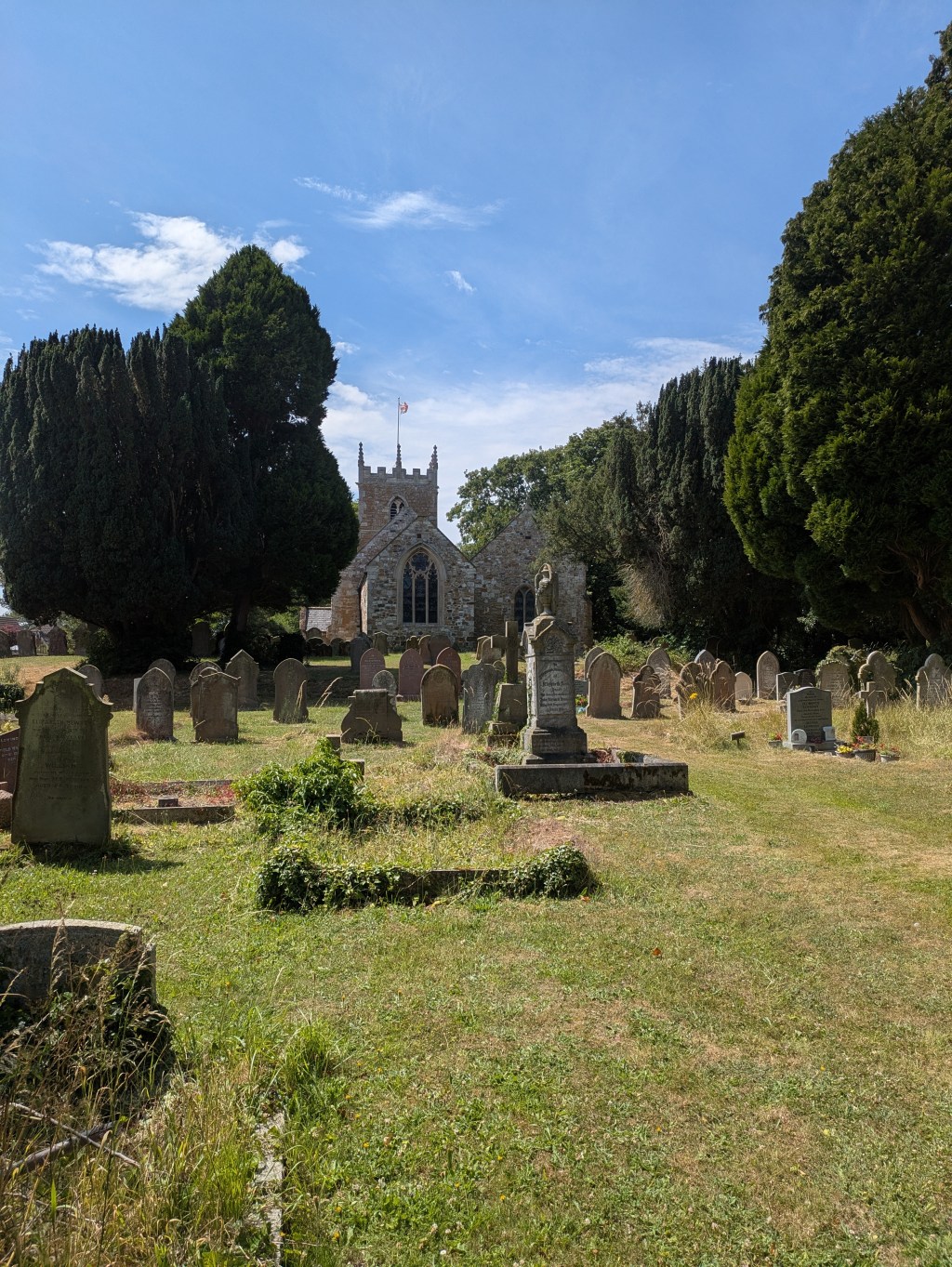
His grave is in the churchyard of St Martin’s in Stamford, and is engraved with a message that states ‘He measured three Feet one Inch round the Leg, nine Feet four Inches round the Body, and weighed Fifty two Stone eleven Pounds!’ His walking sticks, and a famous portrait of him, are on display in the glorious George Hotel, a former coaching inn. The town’s football club, Stamford AFC, is nicknamed The Daniels. Daniel Lambert: A Life in Five Sittings, ed. Mark Blasdale (2019) reproduces some of the poems (accepting they are by Lambert), and presents five texts written about Lambert in the nineteenth century.
Words by RORY WATERMAN


 Lincolnshire Folk Tales Project
Leave a comment