


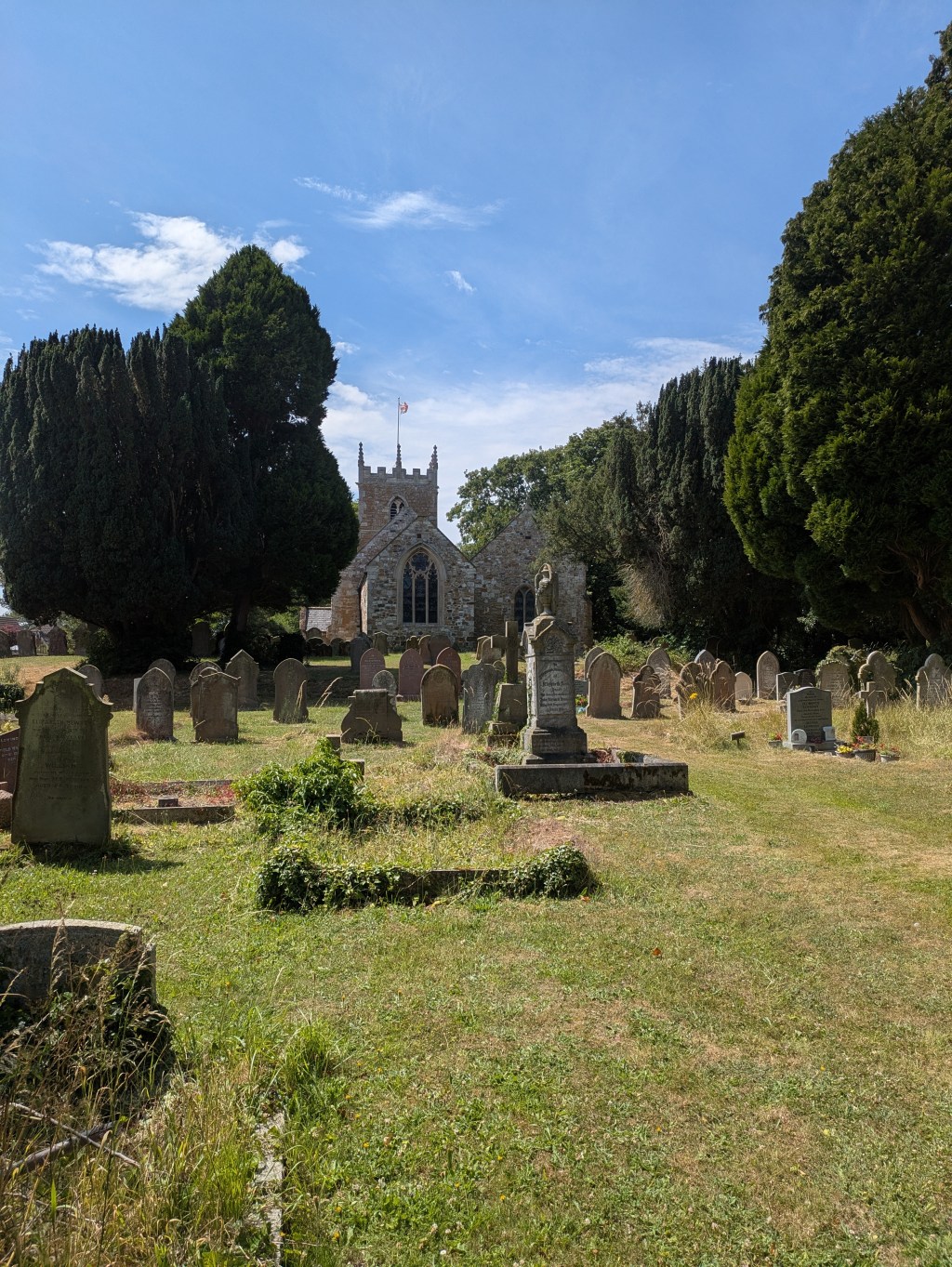
Tom Thumb is the famous hero of a comical fairytale, common in England since at least the early seventeenth century. It begins with a woman’s wish to have a son even if he is no bigger than her husband’s thumb, which is duly granted, and the story follows his subsequent escapades, which vary from one version to another and reflect the wit and whims of the storyteller. He appears in numerous narratives, the earliest of which are often rather ruder than the counterparts now presented in books for children. According to some versions, he is said to have been buried in Lincoln; there is a small apparent tombstone in the nave of Tattershall’s huge parish church, engraved with ‘T. Thumb Aged 101 Died 1620’, and typically accompanied by flowers and a poem.

There is no evidence to link a real Tom Thumb to Tattershall, but he has a long legacy in the village nonetheless. In the nearby Market Place, look at the roof of the Lodge House, which incorporates a louvre: a small extrusion, once more common on buildings than it is in modern times, which provided ventilation. This one is ceramic, may date from the fourteenth century (i.e. it is probably considerably older than the building it is now on), and is in the form of a tiny house, perhaps a foot long. This is, reputedly, Tom Thumb’s House, was presumably once accessed by a Liliputian rope ladder, and appears currently to be unoccupied, though we have not investigated it properly. This oddity was originally on the other side of the square.

The earliest extant reference to Tom Thumb in print is The History of Tom Thumbe, the Little, for His Small Stature Surnamed, King Arthur’s Dwarfe, written by ‘R.I.’ (possibly the pamphleteer Richard Johnson) and published in 1621. Katharine Briggs provides a summary of ‘The History of Tom Thumb’ in Folk Tales of Britain (1970).
Words by RORY WATERMAN

 Lincolnshire Folk Tales Project
Leave a comment