

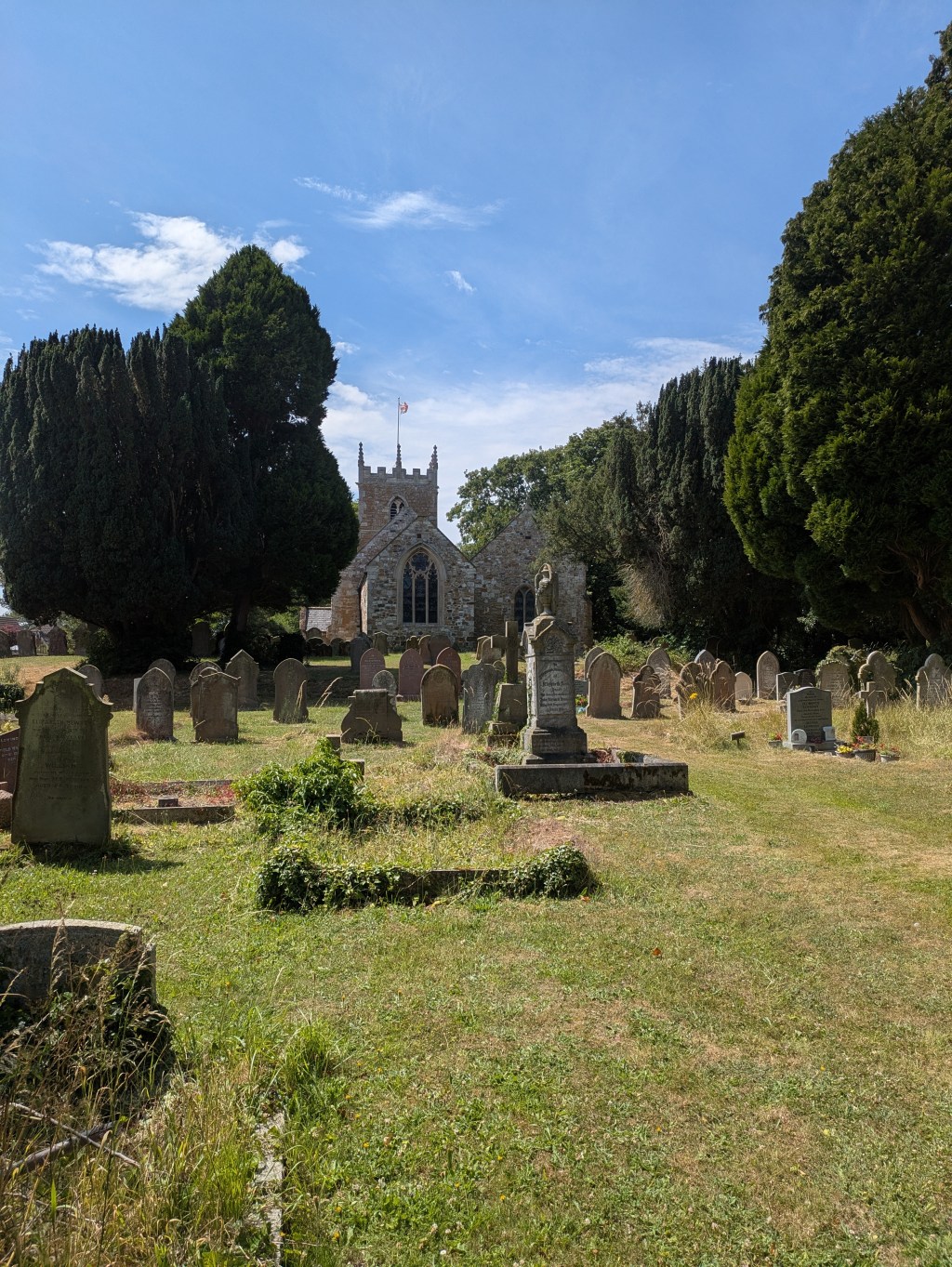
Tales exist concerning a witch who lived close to Tetford church, in a cottage with a small hole in it, through which she was allegedly seen to pass in the form of a hare – once commonly believed to be a regular form of disguise for witches. She had a reputation for cursing the villagers. One day, a hare stood up in front of a hunter, and he peppered it with shot; the next day, she was found at home, nearly dead, with either shot wounds or boils all over her. In some renditions of this tale, she eventually recovered; in the rendition included by Mary Borrows in ‘Witches in Lincolnshire’, Lincolnshire Life (April, 1986), she dies.
A version of this tale, collected locally, is included by James Alpass Penny in Folklore Round Horncastle (Morton & Sons, 1915). In this version, she was ‘supposed to have bewitched her own son and daughter to death, and also her sister […] who was taken very ill’. Penny was interested in recording what people believed to be true, so we can be fairly sure many thought it was. Another, called ‘The Hare, Bumble-Bee and Hedgehog’, is told by him in its sequel, More Folklore Round Horncastle (Morton & Sons, 1922). Two men are hunting for game near Tetford, and see a hare, but the first man’s gun won’t fire. The other man snatches the gun and shoots the hare in the left hind leg, and it limps away. He then goes home to his mother, who complains that her leg started hurting just before he returned home. The next morning, she asks him to go see the wise man ‘and find out what ails my leg’ and what she can do to cure it. The wise man tells him that his ‘good angel’ had ‘kept the gun from going off in your hands when it was close, to prevent you from shooting your old mother, for she is always going about as a hare, witching folk.’ The cure, apparently, is ‘to catch a hedgehog, saw off its left hind leg’, and give it to his mother ‘to rub her bad leg with it’. He does so and, miraculously, ‘it was soon alright again’.
Words by RORY WATERMAN

 Lincolnshire Folk Tales Project
Leave a comment