

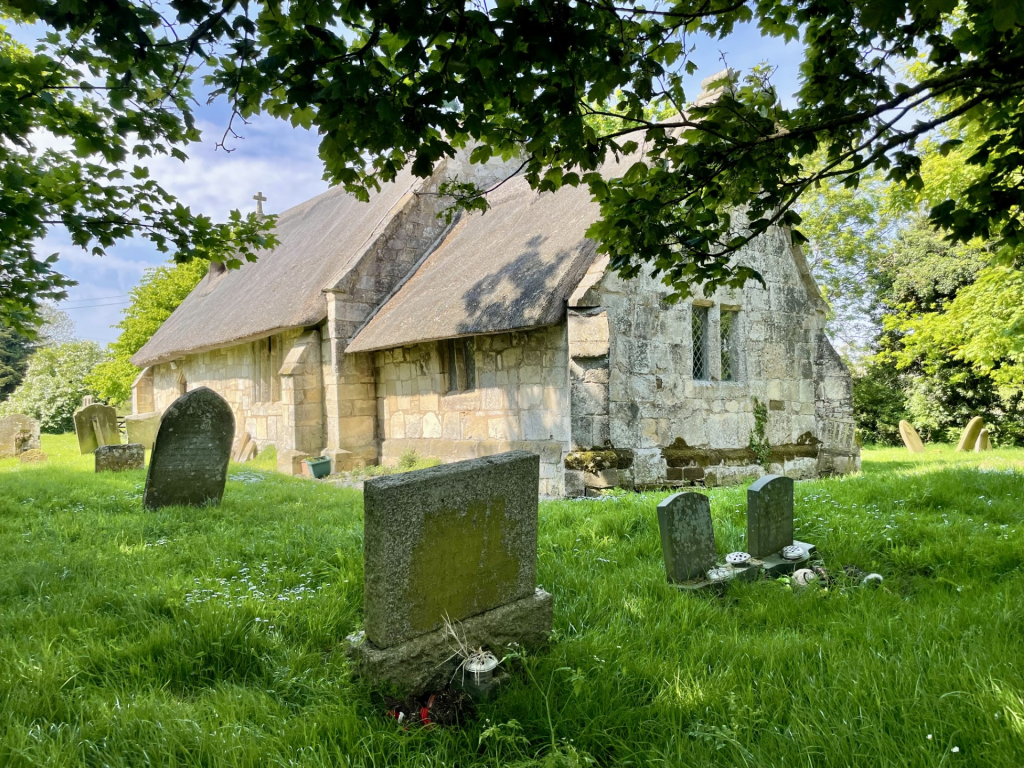
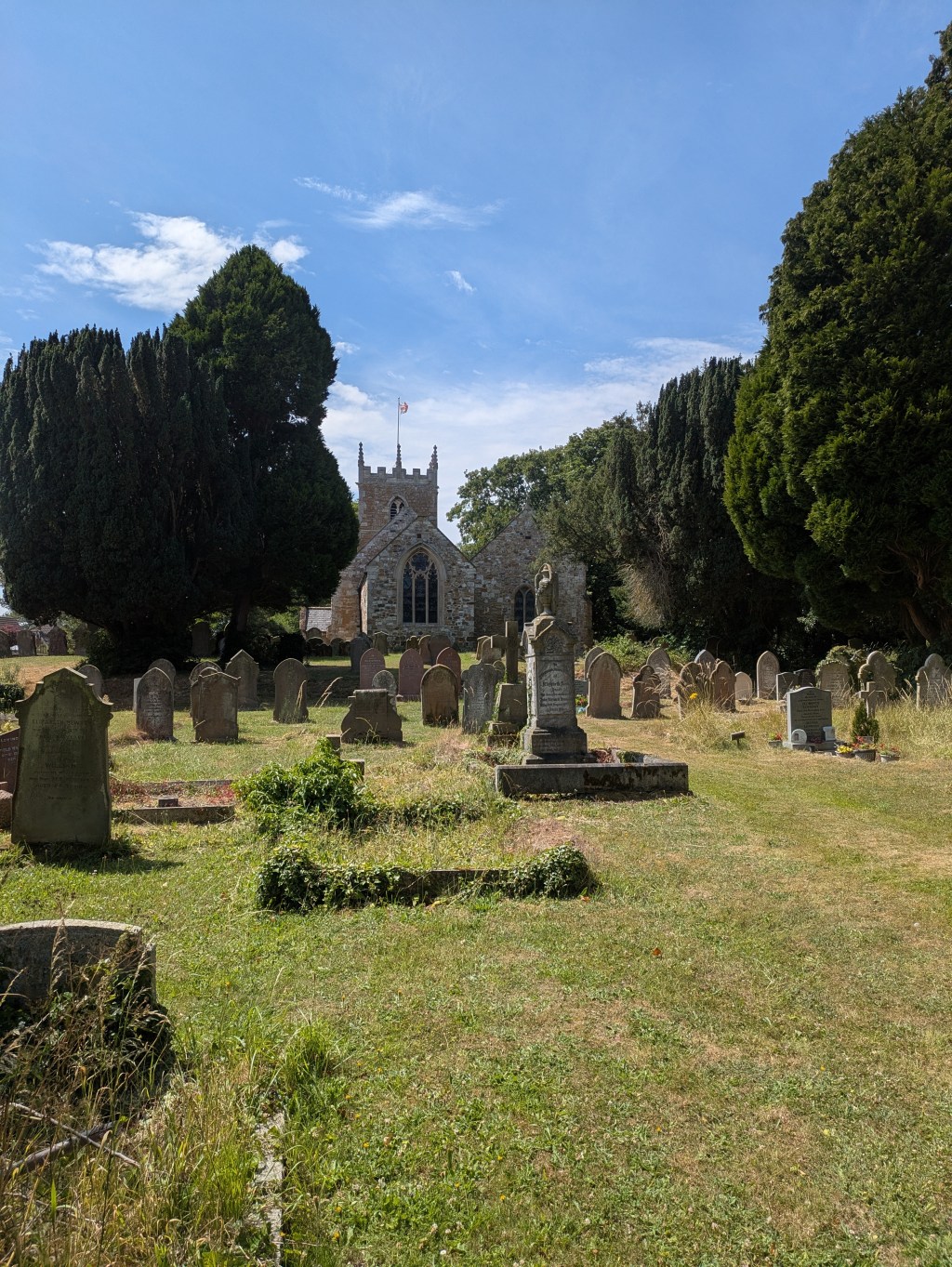
This is the only thatched church in Lincolnshire, and was built in 1611 using stone from Markby Piory, which previously occupied the same site. It is one of the county’s many under-appreciated gems.
According to legend, anyone who runs three times round the church anticlockwise at midnight and then bangs a nail into the door will see a ghost. We obviously do not endorse this act of vandalism, but many small holes and nailheads in the door attest to the prevalence of this custom, possibly into more recent times. Michael Wray concocts a brief story about this Markby legend, in which the awoken vicar is mistaken as the apparition, in 13 Traditional Ghost Stories from Lincolnshire (2003).
Sean McNeaney’s youTube channel, ‘History and Folklore’, includes this episode from 2021, which tells of what is perhaps a wholly separate legend at Markby church, involving the ghost of a Viking warrior:
Circling a church anticlockwise, or widdershins (as opposed to deosil, sunwise/clockwise) is considered unlucky across much of Europe, and circling a religious building clockwise is a common rite in many religions, e.g. Buddhism, Sikhism, Hinduism and Jainism. In Britain, the notion that circling a church widdershins was unlucky remained a ‘purely a Scottish and Irish belief’ until the nineteenth century, as Jacqueline Simpson and Steve Roud note in A Dictionary of English Folklore (2000), but subsequently it became more widespread in folk belief. A person moving in this manner may expect anything from meeting ghosts or the Devil to being transported to Fairyland, as happens to a hapless young girl in the fairytale ‘Childe Rowland‘. Similar traditions have been reported all over the place, and in Lincolnshire they persevere to some extent in locations as varied as Bardney, Dorrington, and the covered well at the east end (‘back’) of Lincoln Cathedral.

Words by RORY WATERMAN
 Lincolnshire Folk Tales Project
Leave a comment