

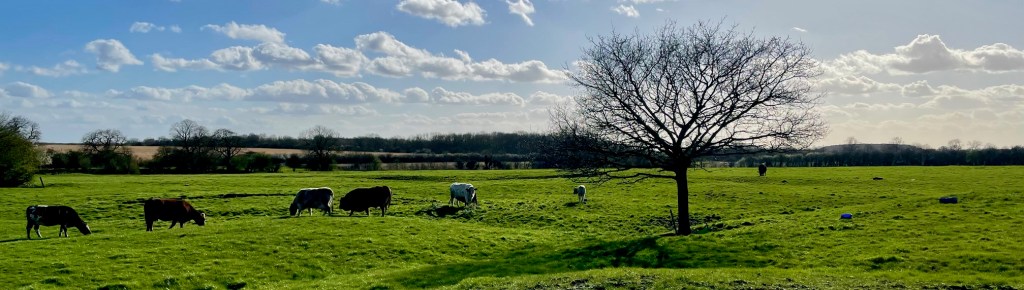
A lad called Fox courts a girl called Bessie, with sudden and apparently huge devotion, and arranges to meet her in the country by a tree. The night before they are to meet, Bessie has a strange premonitory dream, so she decides to get to the tree early, climb it and hide, and see what he is up to. Fox arrives a little after, digs a grave, waits, then fills it back in and leaves when he realises she isn’t coming. The following day, he turns up at her door and ‘axes why she’d bauk’d him’, and she responds with a riddle that isn’t exactly cryptic, which includes these lines: ‘Th’ leaves did shake, / My heart did aache / to sea th’ hoale / Th’ fox did maake’. He tries to run but is apprehended by Bess’s father and several other men, and taken to prison.
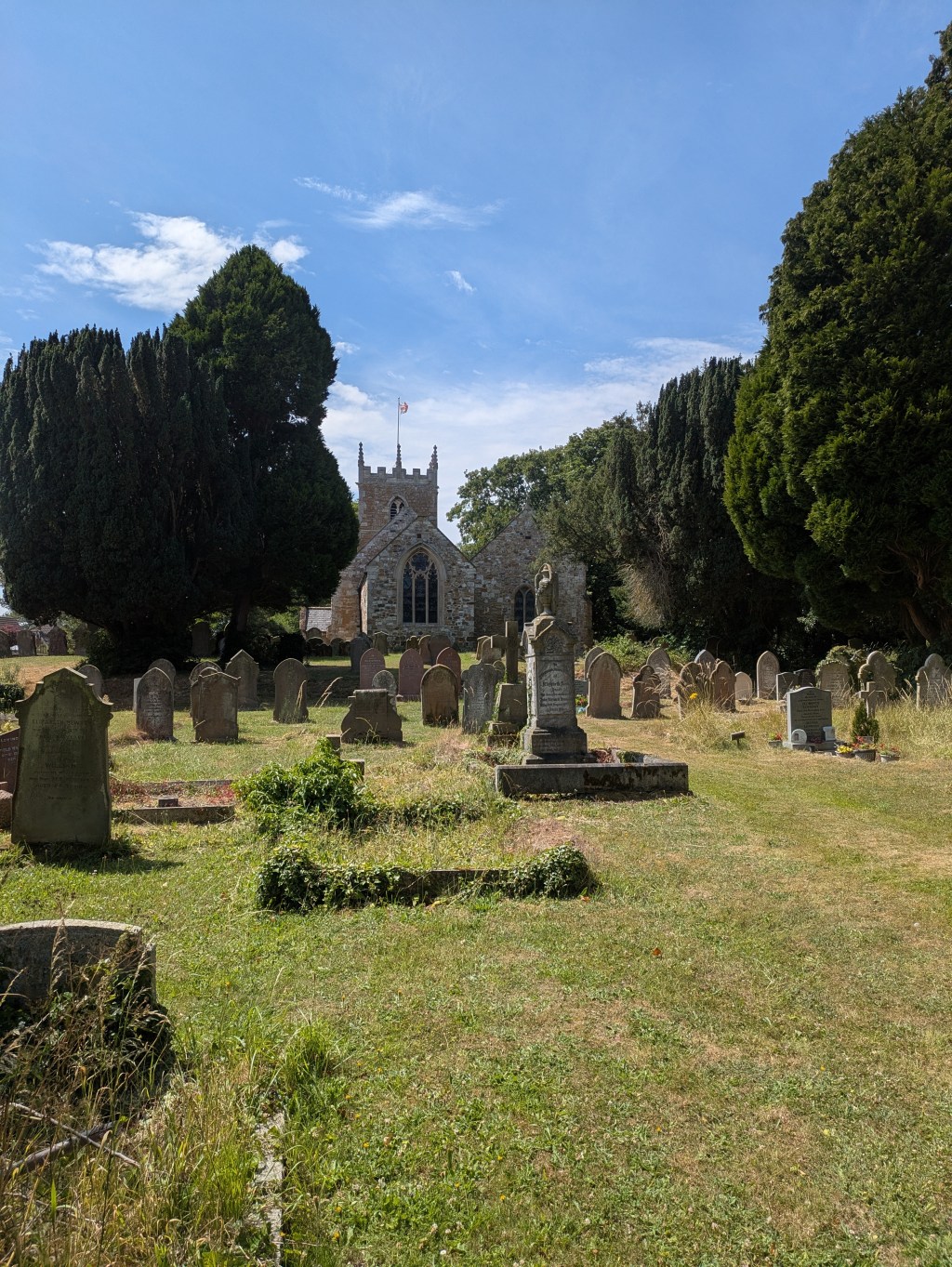
Variants of this tale are local to many parts of England; in Folk Tales of Britain (1970), Katharine Briggs tells several, and notes that ‘This is one of the commonest of English legends’. It was collected by Mabel Peacock in Tales and Rhymes in the Lindsey Folk-Speech (George Jackson, 1886). Maureen James puts it into modern standard English in Lincolnshire Folk Tales, and notes that the narrator ‘said that the story was set in Buslingthorpe’ – once a substantial village, but largely depopulated since the seventeenth century. The earthworks of the medieval village are visible in meadows close to the church.
Adrian Gray has a good version of the tale, which he calls ‘An Unhappy Romance’, in Tales of Old Lincolnshire (1990). A related narrative concerns a Mr Fox who ends up being cut into a thousand pieces. This version was first published in 1790, and was included in collections by Joseph Jacobs in 1894 and by Katharine Briggs in 1970. As noted by Jacqueline Simpson and Steve Roud in A Dictionary of English Folklore, ‘A Gypsy named Eve Gray told a leisurely, carefully detailed version of “Mr Fox” to the collector W. H. Thompson at Grimsby in 1914, calling the villain “Dr Forster”’.
The tale is a variant of what is sometimes referred to as ‘the Robber Bridegroom tale’, perhaps best known in a variant from the Brothers Grimm’s Kinder und Hausmärchen (1812), in which the main characters are a prince and princess, and the subsequent 1857 edition, in which the protagonists are commoners. ‘Mr Fox’, in turn, is included by Joseph Jacobs in his compilation English Fairy Tales (1890). Here, a young lady has a promontory dream that she goes to her suitor’s castle and makes a series of terrible discoveries, which prove to be true, so ‘her brothers and her friends drew their swords and cut Mr. Fox into a thousand pieces.’
While the Robber Bridegroom tale generally does not go into much detail about the bridegroom’s previous victims, the Lincolnshire variant in particular sits alongside several tales of women murdered or abandoned by their sweethearts and forced to haunt the place of their demise. Juliet E. McKenna mentions three of them in the variant she includes in Lincolnshire Folk Tales Reimagined (Five Leaves, 2025), the anthology associated with the Lincolnshire Folk Tales Project: the Black Lady of Bradley Woods, the Irby Boggle, and Tom Otter’s murder of Mary Kirkham – the latter being an historical event mythologised into a gory shocker. With these stories largely overlooking the female victims of intimate partner violence, or consigning them to the role of passive ghosts doomed to wait for other people to seek justice on their behalf, ‘The Lass that Saw her own Grave Dug’ is a refreshing example of female agency.
RORY WATERMAN AND ANNA MILON
 Lincolnshire Folk Tales Project
Leave a comment