

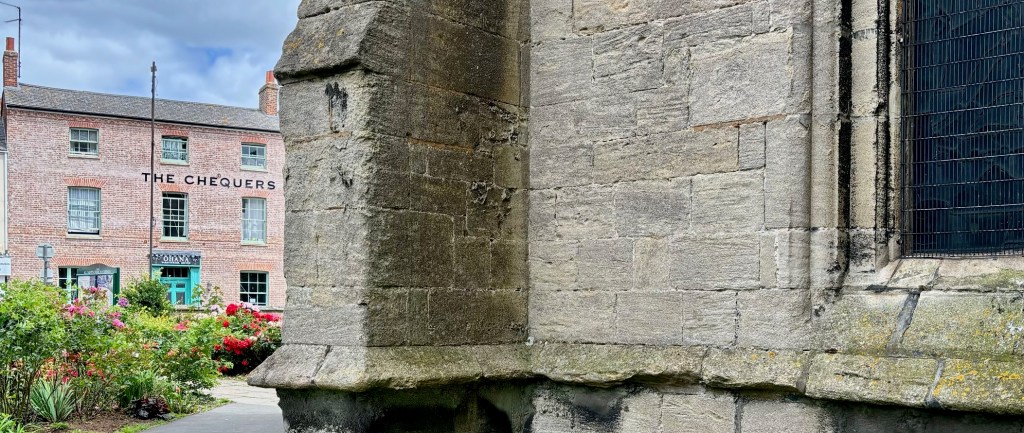
This is the tale of three men who were playing cards in the Chequers Inn, Holbeach, and talking about a friend who had recently died, so they decided to dig him up and play cards with him in the church. This seems really to have happened, in 1783 or 1793, though it soon entered the realms of folklore. One legend has it that passers-by after dark might see lights flickering in the windows, and that they signal the ghosts of the gamesters, who had been dragged to hell by demons that fateful night.
In 1800, the poet Thomas Hardwicke Rawnsley, a friend of the Tennyson family, published a ballad called ‘The Three Revellers, or Impiety Punished: A Legend of Holbeach’, which ends rather fantastically: ‘“What silent, my Dumby, when most I you need / Dame Fortune our wishes has crossed,” / When a voice from beneath, howled, “your fate is decreed / The game and the gamesters are lost.” / Then strange! most terrific and horrid to view! / Three Demons thro’ earth burst their way: / Each one chose his partner, his arms round him threw / And vanished in smoke with his prey.’ A perhaps even more intriguing counterpart is ‘The Sacrilegious Gamesters’ (1843), also a ballad, by the once-popular Victorian poet and Chartist Eliza Cook. In this poem, the dead gamester is described as having ‘died in the midst of his career, / As the sinful ever die; / without one prayer from a good man’s heart, / One tear from a good man’s eye’; one of the gamesters has a flash of conscience as they play, and then himself dies also, but they are all presented as utter scoundrels.

In some versions of the tale, the body is disinterred by the man’s friends; in others, it is already in the church, awaiting burial. Whichever version is told, and whatever inflection it is given, the tale is inherently intriguing: it blends understandable mourning with unconscionable sin.
Ethel Rudkin recorded a version of the tale, in prose, in 1931. Polly Howat, among others, gives a rendition (also in prose) in Ghosts and Legends of Lincolnshire and the Fen Country (1992). In 2023, Jim Moon wrote a detailed post about the events, and their legacy in local legend, for the South Holland Heritage blog.
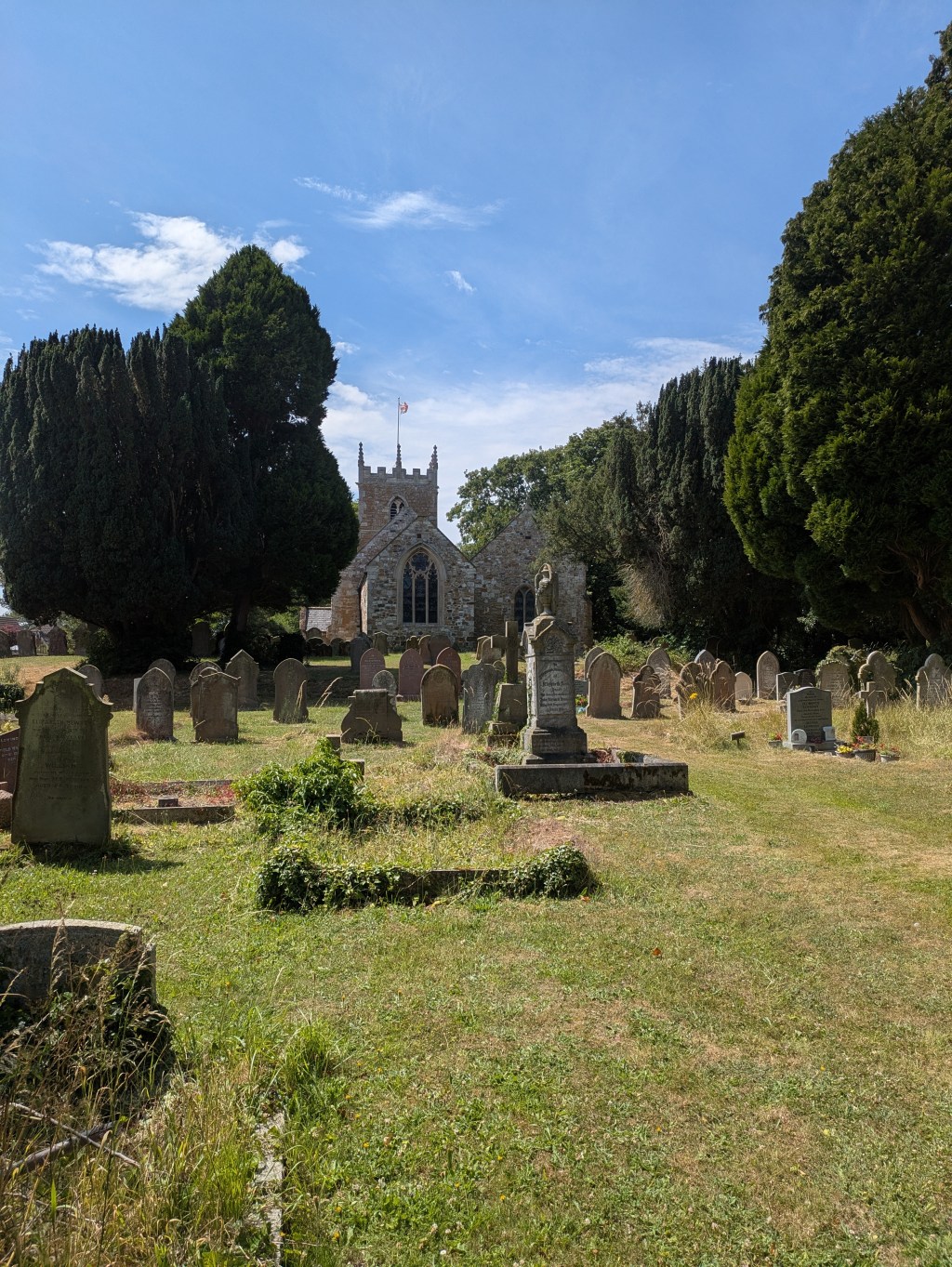
An information board in the church includes a brief description of the legend. The church is an exceptional example of perpendicular architecture, and contains some fascinating late medieval tombs and monuments. The Chequers Inn closed after the Covid pandemic, and is now an Indian restaurant, but the pub name remains on the building.
Words by RORY WATERMAN
 Lincolnshire Folk Tales Project
Leave a comment