

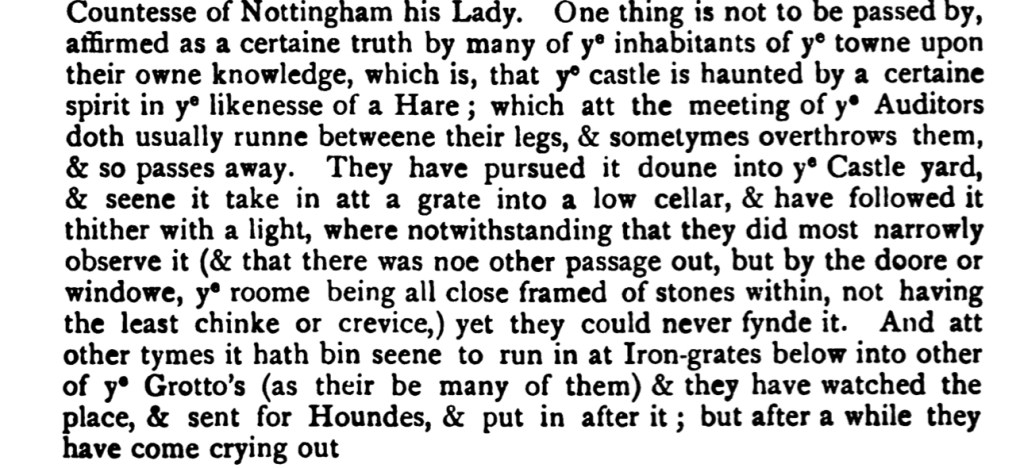
In the seventeenth century, stories abounded that a hare at Bolingbroke Castle was a transformed witch who had once been imprisoned there. Writing between 1634 and 1642, the antiquarian Gervase Holles described this as ‘a certaine truth by many of the inhabitants of the towne upon their owne knowledge’:
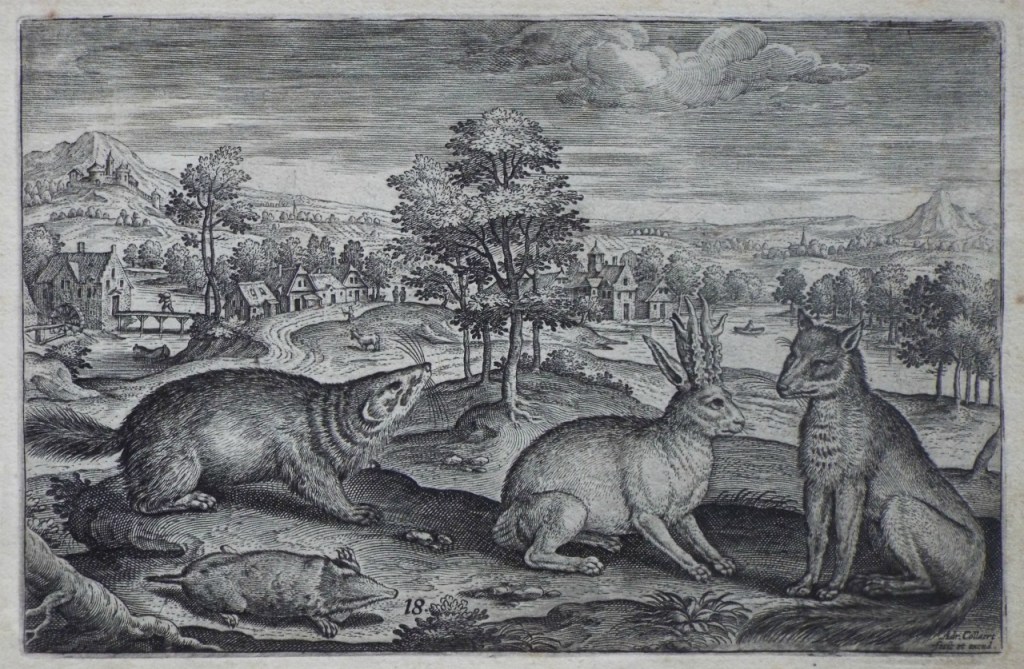
In many accounts, the hare in question is white. According to Daniel Codd, in Haunted Lincolnshire (2007), this witchy hare is still seen in the month of March. This is also discussed by Camilla Zajac in Lincolnshire Ghost Stories (2017).

Let’s be honest: this isn’t a folk tale, it is a spurious, anachronistic anecdote. It was often believed that witches transformed into hares. But Bolingbroke Castle is an evocative site – and was the birthplace of Henry Bolingbroke, later King Henry IV – so it deserves a folk tale, even if it doesn’t seem to have one, or at least one that is remembered.
Writing in the journal Folklore in 1901, the Lincolnshire writer and folklorist Mabel Peacock – perhaps sounding rather credulous to us now – states that ‘One of the witches whom I myself have seen, was credited with being able to change himself into a dog or a toad, that he might injure the pigs, bullocks, and, other live stock of his neighbours.’ She goes on to note that ‘With us, be it observed, the word “witch” is often masculine’, though it is worth pointing out that the overwhelming majority of ‘witch’ accusations in Lincolnshire (and elsewhere) concern women.
Words by RORY WATERMAN

 Lincolnshire Folk Tales Project
Leave a comment