


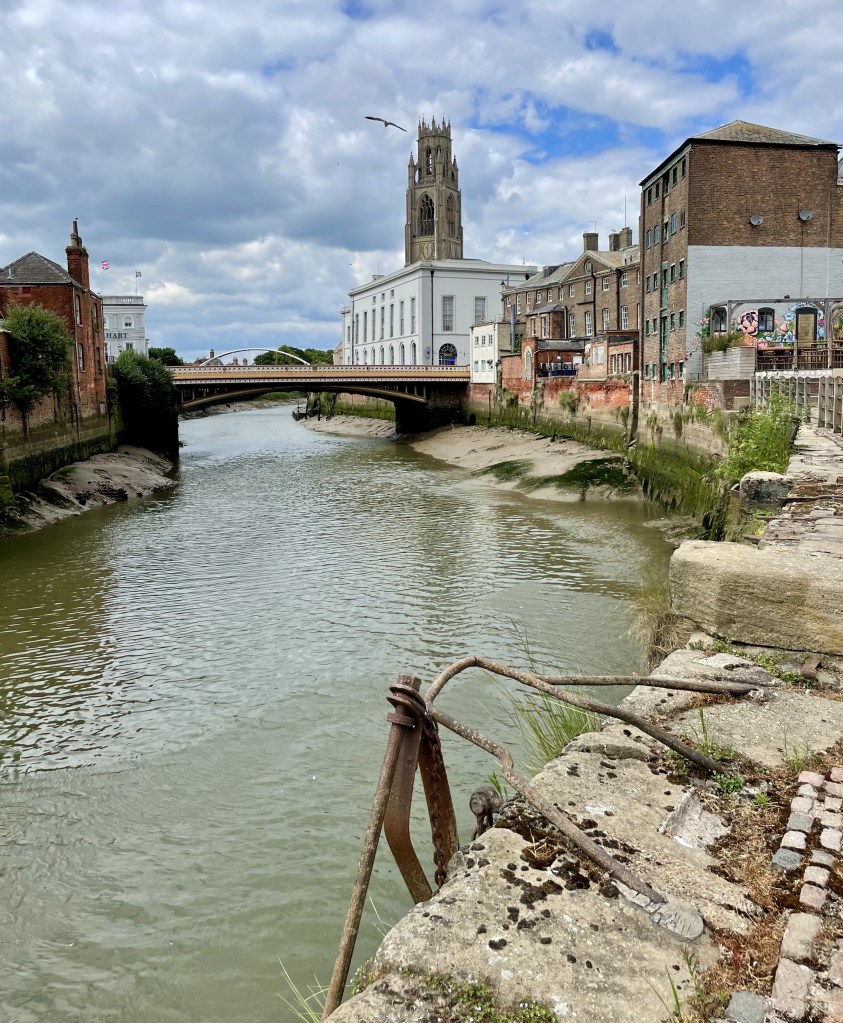
It is often windy around St Botolph’s Church, commonly referred to as the Boston Stump. This wind is usually particularly strong on the footpath by the tower, the most exposed spot in the churchyard. But don’t make the mistake of thinking that is because this side of the churchyard is next to the river, which is itself quite close to the sea, in a huge area of flat land. Instead, learn from a folk tale, which bears some resemblance to an aspect of the folklore regarding the Lincoln Imp in Lincoln Cathedral.
Perhaps the most enjoyably odd extant rendition of the tale in printed sources is from Roger Quaint, Traditions of Lincolnshire: First Boston in the Olden Times (John Noble, 1841). ‘Some vain-glorious philosophers have pretended to explain this phenomenon on what they call scientific principles’, Quaint tells us. However, after St Botolph had erected a chapel here in the seventh century, he allegedly found himself feeling ‘self-satisfaction’ and his own ‘vain-glory’, and realised he must have been affected by ‘the subtle serpent’ who had inflicted upon him ‘that most fatal delusion of religious enthusiasts – spiritual pride’. He then felt ‘the presence of his Satanic Majesty, in propria persona’, and they got into a ‘most desperate struggle’ in which Botolph ‘most soundly belaboured the infernal, until the poor devil puffed and blowed so violently as to raise a whirlwind, which has never since entirely subsided.’
Boston in the Olden Times also contains an anecdote about a ghostly Franciscan friar in the library, who apparently handed the author the book he was looking for. Lucy Wood mentions that anecdote in The Little Book of Lincolnshire (2016). You can visit the St Botolph’s library upon request in the church, and for free. It is above the porch, and contains some exceptional items, including a seventeenth-century translation of the Quran and an eleventh-century copy of Augustine. You’ll probably have to find the book you’re looking for, though.
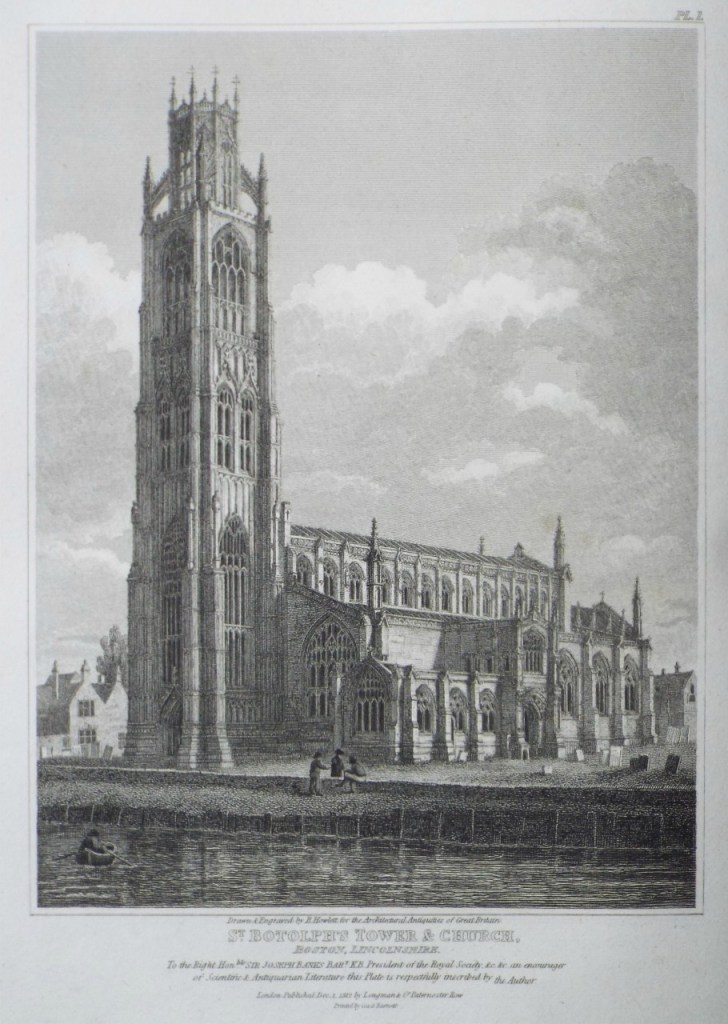
A ghost is occasionally reported to be seen jumping from the tower, or ‘Stump’ – allegedly that of Sarah Preston, overcome with guilt for inadvertently bringing plague to the town in the late sixteenth century.
You can climb the Stump if you want to; if you do, you won’t escape the ‘whirlwind’, but you will be at the top of the second tallest Medieval non-spired tower in England (after Lincoln Cathedral, which you can see from here on a clear day).
Words by RORY WATERMAN

 Lincolnshire Folk Tales Project
Leave a comment