


An infant boy of noble birth is stolen by witches, ‘to be boiled in their cauldrons for the purpose of making charms of his bones’. The gardener, one Billy Shuffler, promises to rescue the child, but this is mere bravado; he sets out with the lord and several others, all on foot, but chickens out and falls behind the rescuing party. Meanwhile, the boy is found in the mouth of the witches’ den and snatched up by the lord, and the group meet Shuffler as they return – on horseback now, because they find horses in the witches’ cave. They present Shuffler with one, called Old Simon, and he climbs into the saddle. However, the witches then catch up, so the party gallops off, leaving the frightened and bemused Shuffler to fight for his life. Old Simon finally breaks into a gallop and, at Dunston Beck, falls back onto ‘the swell’ – he is ‘old’, after all – so the witches make off with him. Shuffler is later rescued by a villager, and eventually makes it back to the house, presumably having learned a good old-fashioned lesson about the role of normal working people in the stories of true heroes.
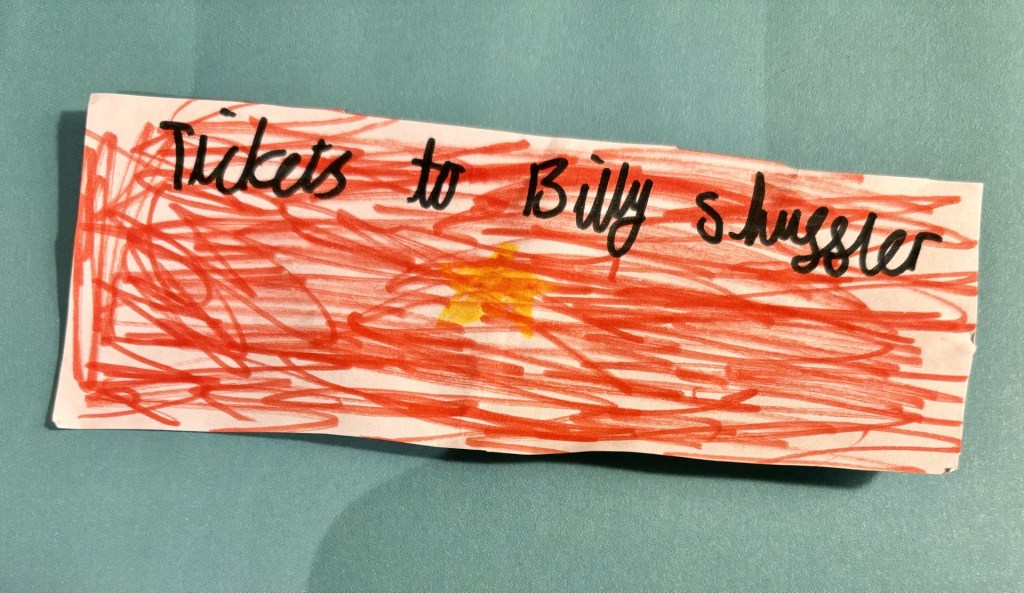
This tale is hardly remembered in the local area. However, in September 2024 we led a storytelling week at Dunston St Peter’s primary school with Adverse Camber Productions and the storyteller Pyn Stockman, and years five and six put on a great performance of a version of the tale to the whole school. It included the neighbouring village of Nocton and its abandoned hospital, a scary wood full of animals, and Billy Shuffler remembering his past life as a golfer who worked in a chocolate factory where he ate as much chocolate as he could; this version of the story ends happily for all concerned, though there are plenty of twists and turns along the way.
The tale (in the form discussed in the opening paragraph) is mentioned in Eliza Gutch and Mabel Peacock, Examples of Printed Folk-Lore Concerning Lincolnshire (1908). Gutch and Peacock refer the reader to Edward George Kent’s Lindum Lays and Legends (1861), in which it is called ‘Billy Shuffler and the Lincolnshire Witches’. Kent claims to have been told the story by an old man, and the way he relays the events (in a blend of long-winded prose and doggerel poetry) makes it seem as though he believed they really happened, albeit a long time ago when the heath to the west of the village was forested. We do not know what versions of the story, if any, were told without being filtered through the sensibilities of a moralising Victorian gentleman.
Words and images by RORY WATERMAN

 Lincolnshire Folk Tales Project
Leave a comment