


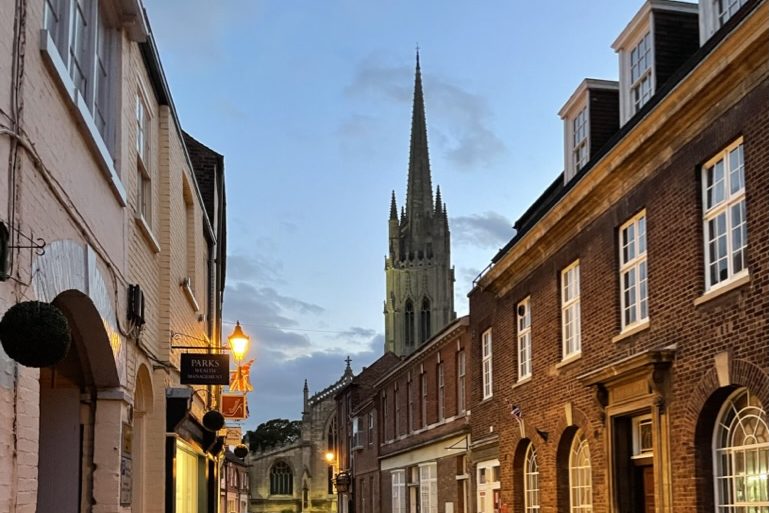
This legend concerns one John Smith, who would apparently turn up at the pub every day at noon and drink twelve half-pints of beer that had been lined up for him, downing the lot before the clock had finished chiming the hour. He seems to have spent rather too much of his money on booze, because when he wanted to buy some goods from a seller, he suggested they should have a beer-drinking contest and the winner should take all the stock. The seller accepted the challenge, and defeated John, who consumed eight pints in the process. The seller then made John an offer: if he climbed to the top of the steeple of Louth’s St James’s Church – the tallest parish church spire in England, no less – he could keep both the stock and the money the seller had in his pocket. John downed two more pints for good luck, gave the man his coat, climbed and came down, then discovered that the seller had absconded, leaving him to pick up the tab. Thereafter, Smith was knows as Ten-Pint Smith.

This is little more than an apparent drunkard’s anecdote, but it still has currency. It was recounted in an article by T. H. Swales in The Lincolnshire Magazine (1939), and is included by Polly Howat in Ghosts and Legends of Lincolnshire and the Fen Country (1992). Lincolnshire County Council maintains a page on the legend. Alison Willis has this fine song, ‘Ten-Pint Smith’, recorded in 2023, about the story. Mark Temple wrote about it for The Lincolnshire Poacher.
Words by RORY WATERMAN

 Lincolnshire Folk Tales Project
Leave a comment